Hello everyone! Making a grand announcement: We want to go back to school and attend grad school at Texas Womens University in Denton, TX for their Masters of Teaching, Leadership, and Collaboration degree plan for graduate school. We want to get proper teacher training and know how to develop a pedagogy, do proper research, and build an all-inclusive multicultural classroom that benefits everyone from all walks of life. I want to learn how to best serve everyone I meet in life. Coming from reading the entire trilogy of ‘Teaching to Transgress’ by bell hooks I was inspired by stumbling into a teaching career in the arts in 2021. After 5 years in teaching and making art my friends, working cohorts, and family and community all agree: “You are meant to teach.” I will share the wealth of creativity I have bursting at the seams! We really are ready to take up the mantle of the latter half of our life too, to give back profusely for all I’ve gained in my life as an artist. Whether through technique, lessons, or experiences in witnessing and depicting life itself all these years, I’m ready to gear up for bringing the ability to make zines, self-publish and create comics and draw and paint to the people. I want my art to mean something too in this current political moment. I need my personal art to continue to carry my political voice and my strengths in design, to push my teaching of the arts to inspire, comfort those who were told “you can’t draw” or “draw like THIS WAY only” or “no anime!” etc…I would like to heal and re-encourage people who have lost their light and love for the arts. The chance to try, try again is out there if we reach our hand out and assist people in seeing the artists within themselves in addition to the children that drew they once were; those children who made art without abandon and without care for what the world thought. For what anyone thought but themselves.
Realizing Our Calling To the Classroom
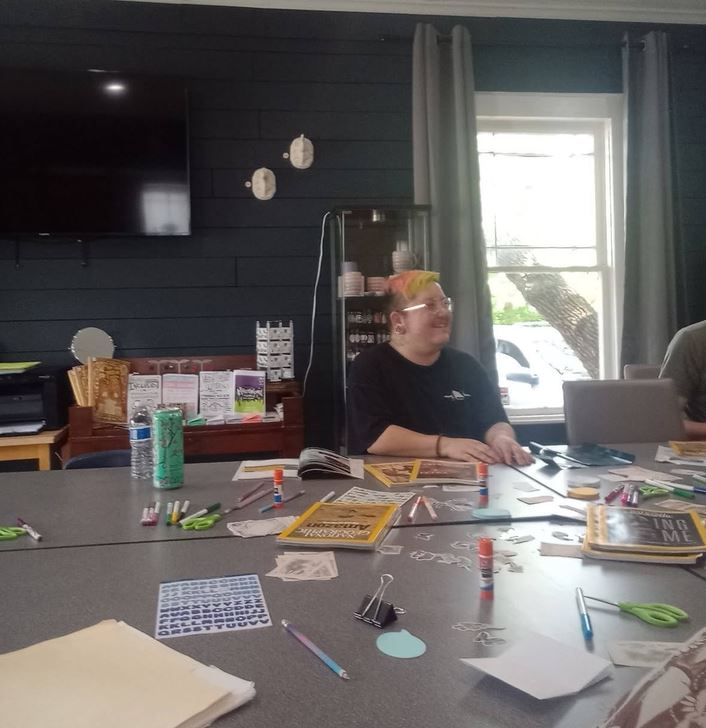
Altogether that is my calling. To bring healing through the arts, in my public-facing intimate spaces – the classroom. The classroom is such an important vessel for unpacking and unlearning and learning new things and really getting into the weeds with people thus we grow so much. All of my favorite moments of life take place in the classroom. I belong there. Thank you for hearing my ramblings. This blog post is a cathartic feeling of releasing my passion and knowing for certain I want this. I played with the idea of “grad school” since Summer 2026 because of my desire to expand my knowledge on zines, self-publishing when I originally making a timeline for Zines 101 taught at the Denton Maker Center. The timeline needs to be accurate to provide the best education for our students. Every time I do my zine class, I seek to improve it, and every time I did my timeline, I found more I was missing and omitting from it by acccident. There’s so MUCH included in zine history when expanding outwards to include proto-zine-like self-publishing – it’s incredible. Copy Machine Manifestos just came out the end of 2025 and it’s fantastic, along with its Art Institute of Chicago debut with the art and zine exhibit stirred by the collection within the book. This all invigorates me to seek the truth and shine a light on our motto. The world’s zine communities are buzzing with excitement and anticipation for a revolution to happen again. Let’s make that happen together! We start here by learning where we came from and what we can gain from looking up to our ancestors in print media.

Ovaettr Art & Zine Distro’s motto is also our thesis statement which I present here:
“We believe in zines and self-publishing as a means of liberating the self. Self-publishing has a long history of being the wood used to burn the fires of revolution into the hearts and souls of those who fought for change. They didn’t wait for permission before taking action. You can do this too.”
Zines occupy something I consider a sacred space of evolutionary exploratory and encouraging energy that brings about change in the world – revolutions! In our known history, self-publishing was widely used to distribute ideas throughout the underground and into the hands of every common man. There are many methods that exist to self-publish your own media and they have been around since long before the copy machine or the computer that modern zinesters like me are used to using in the year 2026.
Creating the Timeline
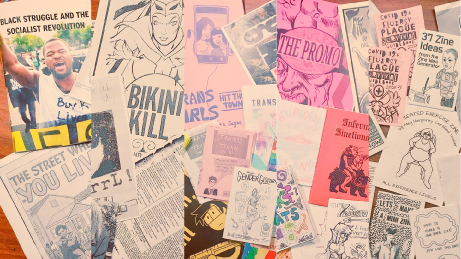
For our zines class we started creating a rough timeline of zines as they’ve existed throughout history. Upon reading more books and more zines and more articles online, I kept finding out more and more about zine history until I’ve autistic hyperfocused to the point of knowing most of it by heart now down to the years and notable author names. We love how enriching the discovery of this old timesake felt. From the day I made my first zine, I knew it was something special. Little did I know how far it would open me up to the world, giving me more purpose, confidence than ever, and a place to really grow and get my work into the hands of the people on their level eye-to-eye at markets and through penned letters to internet customers. The internet itself has connected me to a wide swath of culture and the arts. I owe it my gratitude in expanding my mind. I owe the Disability Pride Month week-long event extravaganza my heart as they invited me into making zines at a Wednesday…I think 2PM? Workshop I was fortunate to attend. I was at my parents, still recovering from burnout and homelessness and working on finishing college. I graduated a year after I started making zines. If that workshop was not found through Twitter organically I don’t know where I would be. I definitely wouldn’t be making zines. Zines have helped me reach far beyond my original scope of where I thought I “belonged” as an artist, too.
A Little On Our History
I originally went to obtain my BFA at my first undergrad college experience in Media Arts and Animation. Originally, I wanted to only work on creating – yes, this is going to be silly – word for word “boss and enemy monster design for video games” I proudly stated in my orientation events where they asked around the room our goals for attending trade school. Truly, I had no idea where I belonged, and aspired to find a nice studio to develop as a pure artist working on animated films and TV shows. Graduating college was a difficulty. I succeeded only after burning the fuck out and completely withdrawing for a period of time while I sorted out my coming to terms with being non-binary and trans, bipolar type 1 and ADHD / Autistic. After figuring my way through things, I got on medications and HRT for everything and it solved my problems resulting in straight A’s the rest of my time in college. My GPA is definitely not something I’m proud of at 2.6 but we’re fortunate to even have graduated in one piece considering the circumstances of my bipolar type 1 diagnosis hitting the fan in my early 20’s along with the explosion of non-binary realizations. Medicated, I could finally focus. Now, I am here in 2026 teaching at the Denton Maker Center, excelling as a Retail / Donation Specialist at Thistle Creative Reuse and doing commissions and making over 30+ zines with Ovaettr Art & Zine Distro – my own small business since 2017’s first commissions. I owe a lot of my growth to zines. To self-publishing. The Fox Who Became A Girl is a self-published title through two mini grants. I found my home outside of the “studio artist dream” because the industry is a mess as it still is today. I tend to follow off the beaten path. I still get the amazing opportunity to do fantastic work but on a much more local scale, and if I’m doing it freelance who can stop me? Do I really need a studio to bloom? No. Studio occupance would still benefit me to a great degree, but it is not essential to my growth as an artist. I’ve made many memories where I’m at and through the internet connecting me to clients around the world. I am making my own studio spaces where I exist and in what is accessible to me. But that isn’t to say I’ve settled. What I’ve found is a sense of purpose, to something deeper inside me and my zine-making that calls out to me: guide people in liberating themselves through the sacred act of self-publishing your own work. After I took the permission to put my work out there and placed it back into my hands over hoping for a studio to accept me, I started to really bloom as an artist. I started to feel like my art was finally serving a greater purpose.
EDUCATE – MOTIVATE – ILLUMINATE
With all that said…
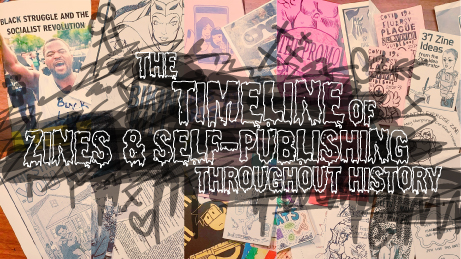
We want to put our working timeline into a format that can be shared. This is the start of our thesis, which we intend to make for TWU’s Masters of Teaching, Leadership, and Collaboration on “self-publishing as a catalyst for revolutionary change” and tie this in with our zine education curriculum as one large project and overall career direction.
Let’s DIVE INTO THE TIMELINE NOW!!!!
THE TIMELINE OF ZINES & SELF-PUBLISHING HISTORY
Researched and presented by Orion Fern 2026
1440’s
The printing press is invented in 1454.
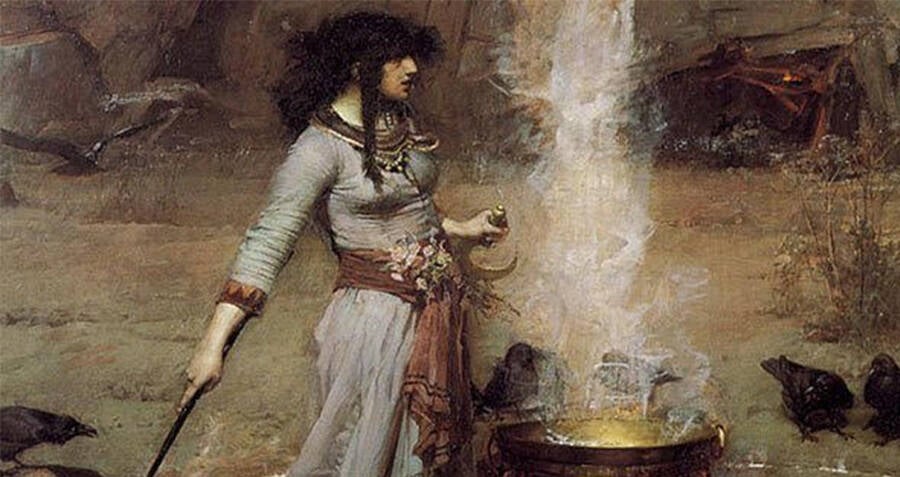
“The printing press, invented in 1454, dramatically changed the way by which literate populations were able to circulate information.” Witchcraft zines were the very first circulated “zines” and self-published work in existence. Passed between hands of the marginalized, the healers. Zines often included old world ways of healing people, astrology, potion recipes, and/or instruction on spells that could assist the people a part of their homes.
“Lay healers of all genders often worked in isolated communities, creating herbal remedies, consulting astrology and other magical means as a way of diagnosing and treating illness, and creating amulets and protection against harmful, unexplainable forces.”
(Source: Women’s Museum of California)
1487-1750
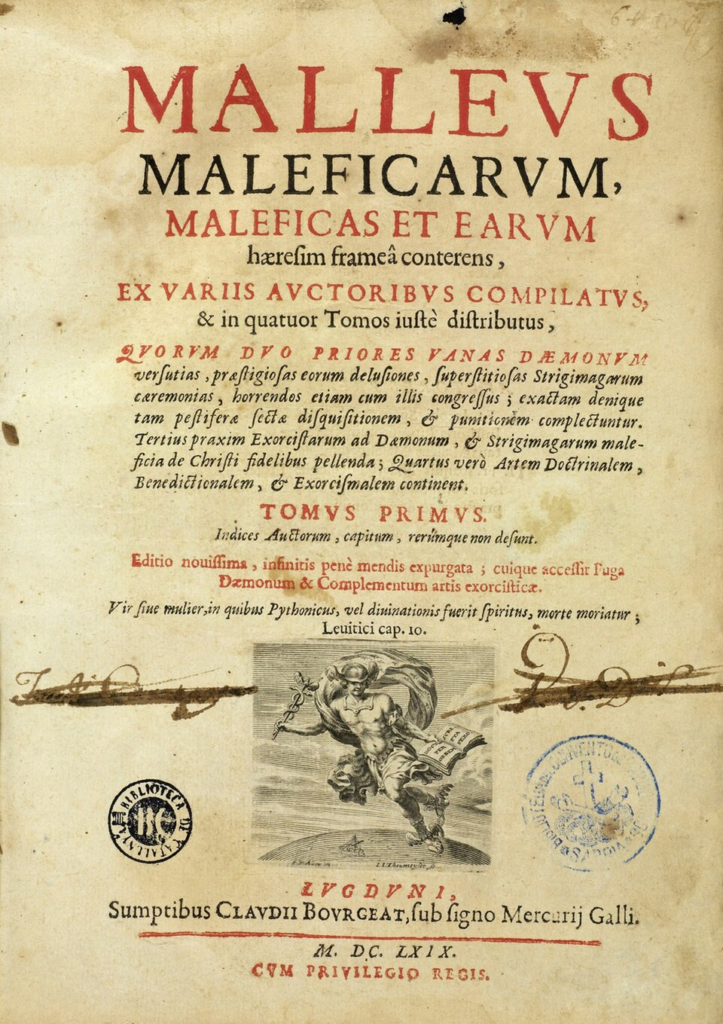
Guides on “Hunting Witches” Emerge,
‘Malleus Maleficarum‘ AKA ‘The Hammer of Witches’ by Heinrich Kramer, released 1487
“The church and those in power made expert use of the printing press, weaponizing it to disseminate propaganda that declared magic and witchcraft inherently evil. With the intent of identifying and punishing women who did not submit to their will, then the church used reproducible media to associate independent women with witchcraft, regardless of their actual experience with magic.”
Witches were hunted as a means of oppressing and disempowering peasants who were women of the old world. As much as this is counter to what self-publishing normally empowers, it is a crucially important part of zine and self-publishing history. The time of “guides for hunting witches” was horrifying and it is an example of the evil side of the self-publishing coin. Furthermore, the hunts “were organized, initiated, financed, and executed by the church and state in an attempt to control women and much of the imagery was disseminated through the mass production made possible through the printing press.”
(Source: Women’s Museum of California)
1517
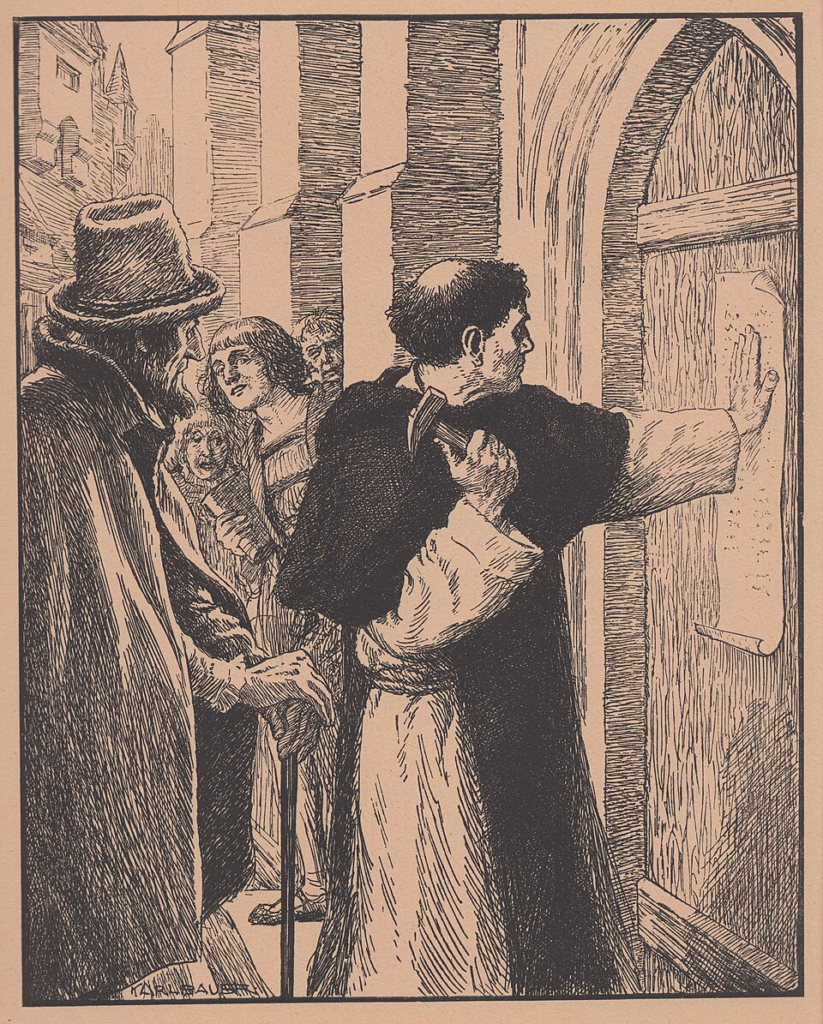
Martin Luther’s ’95 Theses’ VS The Church
Self-publishing has always been a means to spread your own message, and that includes religious messages too. Martin Luther produced his ’95 Theses’ as a means of challenging the Pope and the entire Roman Catholic Church over their corrupt practice of selling indulgences. This means that they were providing “advance forgiveness for sins.” To gain an understanding of why this is bad, consider the fact that “The famous crusaders of the 1500s took advantage of indulgences and pillaged villages, killed men and raped women. After all, they had received their advance forgiveness and letters of pardon.”
Martin Luther famously posted his self-published protest of such practices on the door of a church one day. The way in which this upset people began to spark the Protestant Reformation. Prior, people has spoken these thoughts aloud about the Church but the first person to put them into print format as a means of calling it out was Martin Luther. He later assisted with the development of Protestantism which was influenced by many of his ideas. The point he wanted to make, is that it didn’t make sense to not “stick to sound bibiblical doctrine” which was to be expected of the Roman Catholic Church by the peasants they led and eventually took advantage of.
Self-publishing leads to reformation in this case, and justice. (Source: History.com Editors)
1731
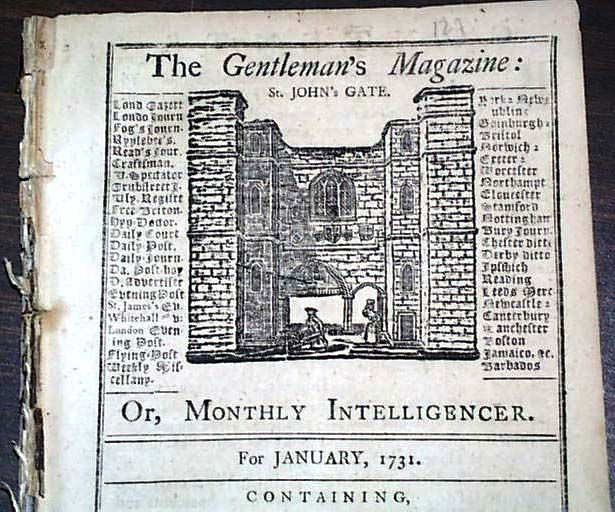
First Use of the Term ‘Magazine’ for a Periodical Journal
The term ‘magazine‘ as it was used prior to 1731 comes to us from military magazines that feature weaponry, arms, etc. for sale in a catalog-like publication sent to military personnel.
The true original root of this term leads all the way back to the 1580s meaning: “warehouse, place for storing goods, especially military ammunition,” as it is present in multiple languages sharing this same meaning including the French word magasin “warehouse, depot, store”, from the Italian word magazzino, and from the Arabic word makhazin, which is plural for makhzan meaning “storehouse.” The original use of this term is almost obsolete entirely.
More modern meanings of ‘magazine‘ appeared in 1868 where it became “a cartridge chamber for repeating rifles” and eventually “a case in which a supply of cartridges is carried (for multiple gun types)” by 1892.
‘Gentleman’s Magazine’ published in 1731 was the first time ‘magazine‘ was used publicly for a periodical journal featuring miscellaneous writings, reviews, etc. From there, more people started using it for the same purpose of print media and booklets both self-published and published through traditional means.
LATER USE AS WE KNOW IT TODAY…
The term ‘zine‘ is a suffix abstracted from the whole term ‘magazine‘ which surfaced in the 1930’s with ‘fan-zines.’ Work ten years prior used the phrase ‘little magazines’ for similar printings popularized by the Black community’s incredible self-published work from the Harlem Renaissance (1920’s.) Titles featured in this timeline include ‘FIRE!!‘ and ‘Opportunity.’
1732-1759
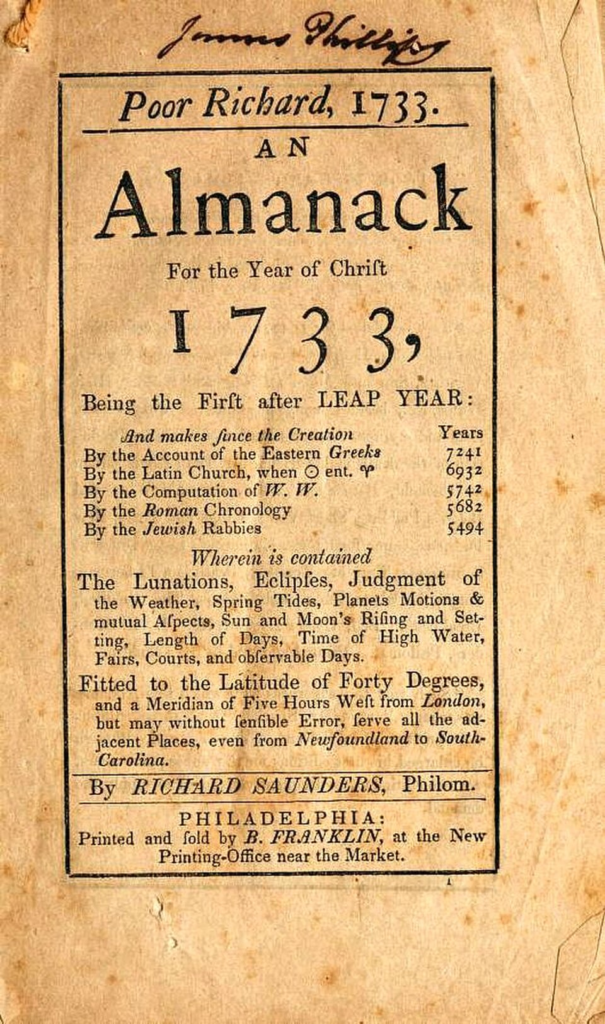
“Poor Richard’s Almanac”
by Ben Franklin
Almanacs have existed since around the 1600s, and took off in the early 1700s when the ability to self-publish spread to more and more people. As almanacs were cheaper than books to publish, many put out their own takes on an almanac. This is why in modern day we have ‘The Farmers Almanac’ and ‘Old Farmers Almanac’ and they are two separate entities. There are many takes on the idea of an almanac. Ben Franklin was one of those many people who took the helm of putting out their own almanac. ‘Poor Richard’s Almanac’ was the title Ben Franklin published under. His specific almanac ran from 1732-1759. The Almanac in general remains a revolutionary tool that brings people together, especially rural communities. (Source: Addison Rizer for BookRiot)
1775
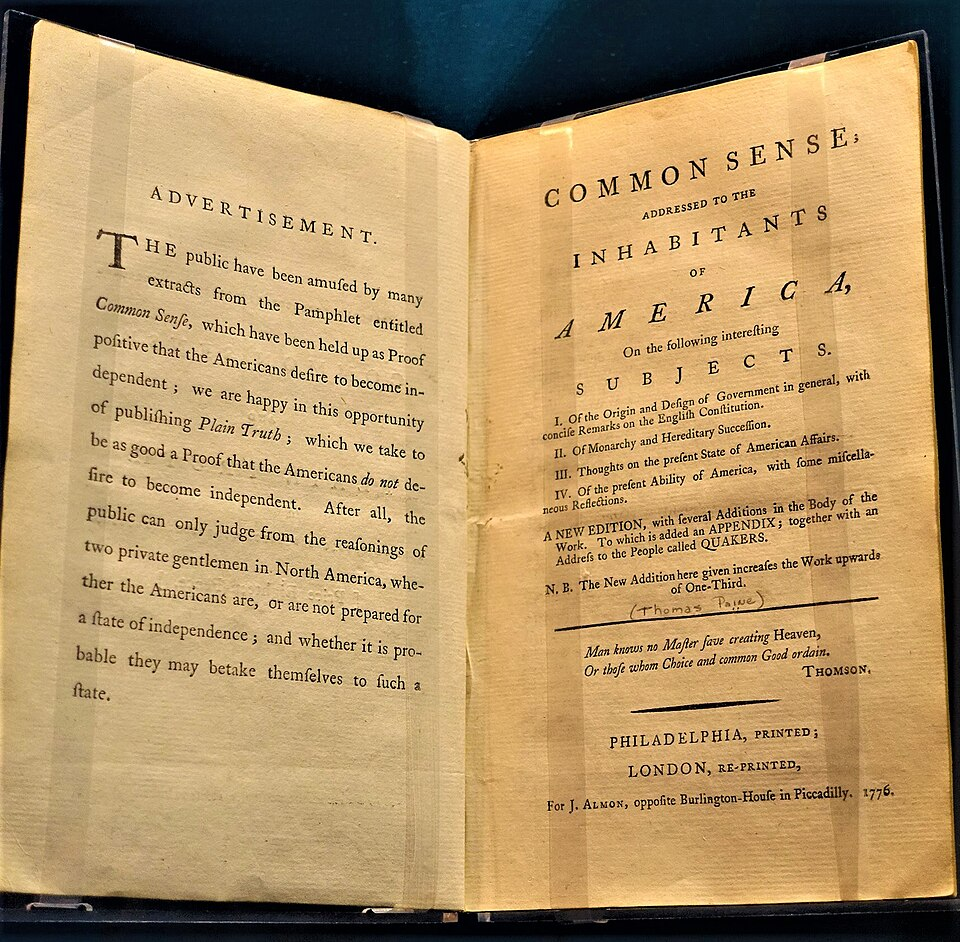
‘Common Sense’ by Thomas Paine
A 47-page pamphlet written by Thomas Paine from 1775-1776 which was the original persuasive document that encouraged people of America’s Thirteen Colonies to fight for independence from the monarchy of Great Britain. The pamphlet made the case for independence through political and moral arguments printed within the pages. Paine distributed and published this what I like to call a “proto-zine” anonymously on January 10th, 1776. This document is responsible for sparking The American Revolution. Zine-making and self-publishing as a means of liberating the self lives in the very blood of our country in the United States of America. (Source: America In Class, direct text)
1787 – 1788
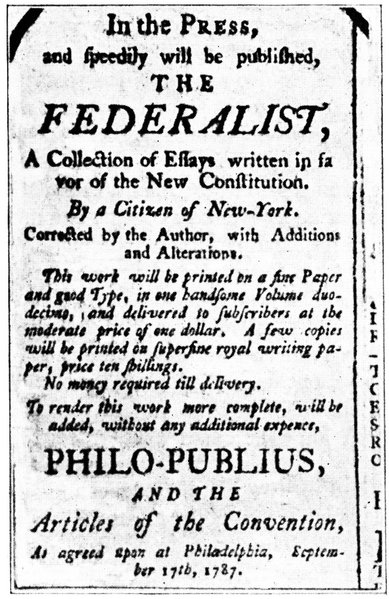
‘The Federalist Papers’ by the founding fathers Alexander Hamilton, James Madison, and John Jay
Part of the American Revolution continuing forward was ‘The Federalist Papers’ – also like ‘Common Sense’ the papers were published anonymously under the pen name “Publius” in a multitude of state newspapers available at the time. These being ‘The New York Packet’ and ‘The Independent Journal’ primarily and reprinted in others later on. There were 85 total essays issued of ‘The Federalist Papers’ that were written and originally published between October 1787 and May 1788.
The papers, later on, formally became our constitution. Each portion of ‘The Federalist Papers’ defined what our government would be and what was expected of the people of a functioning government – from taxation to economy to militia procedures, it’s all there. Self-publishing can lead to revolutions that birth new countries and governments. In light of that, this ‘proto-zine’ series of issues lies at the very heart of America’s independence. We don’t intend to commit the sin of supporting American exceptionalism but rather want to highlight the deep roots that self-publishing has within The United States of America and it’s revolutionary birth. (Source: Library of Congress)
1827
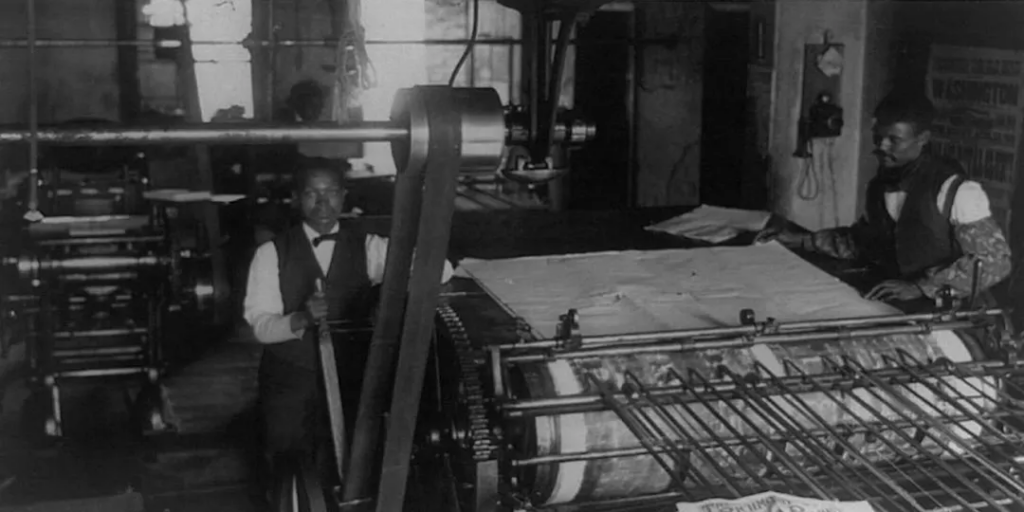
‘The Abolishment of Slavery in New York & Black-Run Newspapers: ‘FREEDOM’S JOURNAL’
“At a time when anti-literacy laws prevented the vast majority of enslaved people from reading, a group of free Black New Yorkers launched the nation’s first Black newspaper on March 16, 1827.
Aptly named Freedom’s Journal, as it started the same year that New York outlawed slavery, the publication helped shift the characterization of Black Americans, whom the mainstream press typically portrayed through a racially biased lens.” […]
“By the time the Civil War began in 1861, more than 40 Black-run newspapers were in circulation. These publications humanized Black Americans to readers worldwide and put pressure on the United States to end the “peculiar institution” known as slavery.”
(Source: Nadra Kareem Nittle)
1818 – 1840
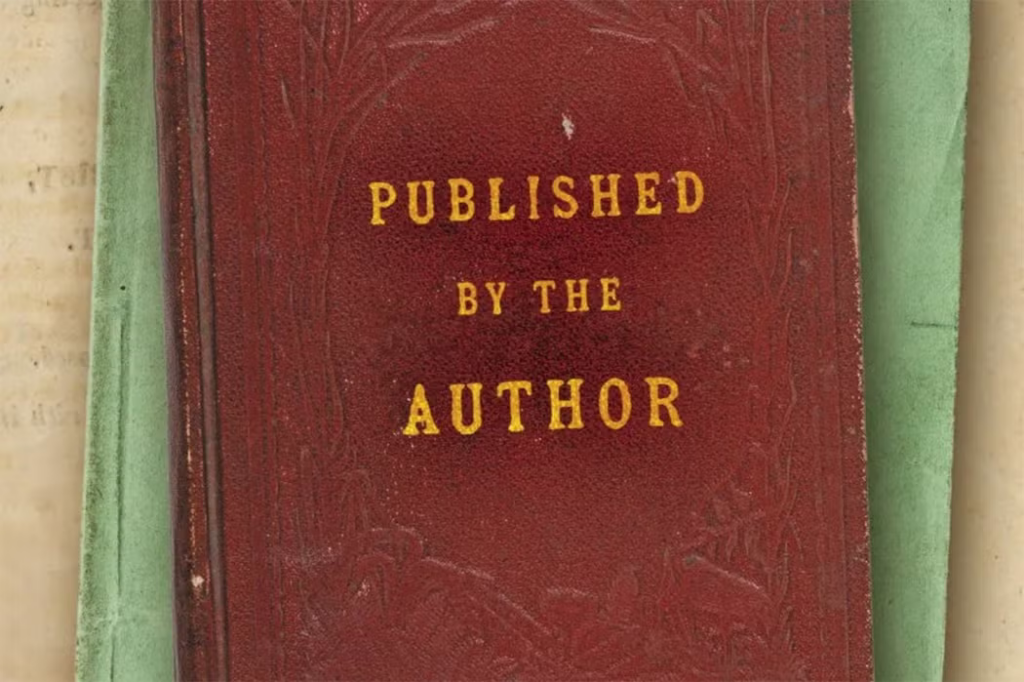
“Published By the Author” / Self-Publishing & Black Liberation
Due to blatant racism and the exclusionary practices of the ‘mainstream’ white print culture, Black authors turned to self-publishing as a means of survival and having their voices heard – in truth, without fear of upsetting any editors or publishers involved. Black authors perservered and their “works were printed with the letters “s.n.,” or sine nominee. No name, no publisher.” “Published by the Author” was another common sight on books written by Black authors pre-1840. This was to protect themselves in the case of telling the truth in their work from any violent backlash.
Many Black authors wrote about their experiences in slavery, because the racist slavers of the white community’s attempt to control the narrative at the time, often insisting that Black Americans were not capable of leading full lives independently and “needed slavery” to live their lives fully. They would not be erased, and many slave narratives were self-published documentations of the true history of the 19th century.
“The rise of the abolition movement opened new doors, but it also made self-publishing more attractive for authors like Frederick Douglass and Sojourner Truth.”
(Source: Tim Brinkhof for JSTOR)
Frederick Douglass self-published ‘Narrative of the Life of Frederick Douglass’ 1845, a memoir detailing his time in Lynn, Massachusetts as an enslaved man. He created 3 more: ‘My Bondage & My Freedom’ (1855) and ‘Life and Times of Frederick Douglass’ (1881, revised 1892)
1847
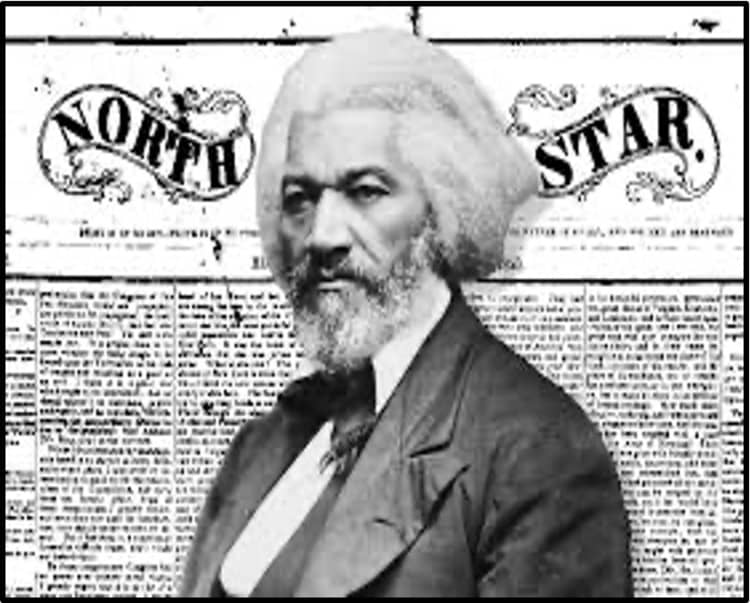
Frederick Douglass & ‘THE NORTH STAR’
One of the most popular Abolitionist Newspapers in existence, Frederick Douglass started it and published it originally on December 3rd, 1847.
“The name of the newspaper paid homage to the fact that escaping slaves used the North Star in the night sky to guide them to freedom. It was published in Rochester, New York, a city known for its opposition to slavery. The motto of the newspaper was,
“Right is of no sex—Truth is of no color—God is the Father of us all, and we are brethren.”
“Published weekly, The North Star was four pages long and sold by subscription at the cost of $2 per year to more than 4,000 readers in the United States, Europe, and the West Indies. The first of its four pages focused on current events having to do with abolitionist issues. An occasional feature, “The Den of Villany [sic],” was a forum for Douglass to comment on discrimination in American society. Pages two and three included editorials, letters from readers, articles, poetry, and book reviews, while the fourth page was devoted to advertisements. In the paper, Douglass wrote with great feeling about what he saw as the huge gap between what Americans claimed to be their Christian beliefs and the prejudice and discrimination he witnessed.
(Sound familiar?)
[…] Douglass was also a staunch supporter of education for African Americans and equal rights for all, including women.”
(Source: Britannica)
1848
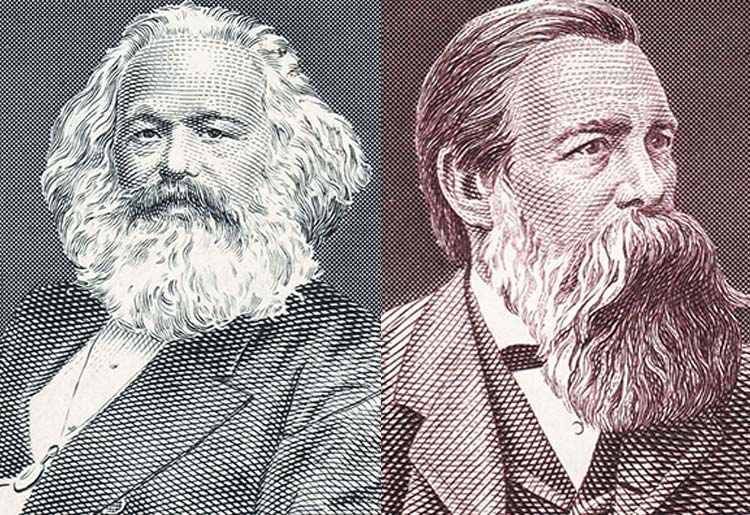
The Communist Manifesto by Karl Marx and Friedrich Engels
Over in Europe, the first and most systematic attempt to codify a more widely consumable educational material covering the history of existing society and it’s history of class struggles. In detailing the difference between the social classes, these classes are determined by where you are in relation to the means of production. In an easier to understand way, where do you fall in the line of producing things in a country? Are you the working class? Or are you the richer class scooping up all the profit? Communism is the political system in which there is a classless society, where we all benefit from communal efforts to better the world and provide people what they need without “profit” being the thing at the top of people’s mind the most. The Communist Manifesto came at a time during the 1848 European revolutions and was one of the best things a common working class person could read at the time, promising them a better future if they work together with their fellow proletariat (working class, wage workers) in their society. Self-published, the Communist Manifesto is the groundwork laid that spread far outside of Europe and into the rest of the world establishing Socialist, Communist, and Marxist groups that still fight together for worker’s rights in today’s unjust world. Additionally, I would argue that The Communist Manifesto is one of the MOST reprinted self-published material on the face of the Earth itself.
(Source: Wikipedia)
1878 – 1881
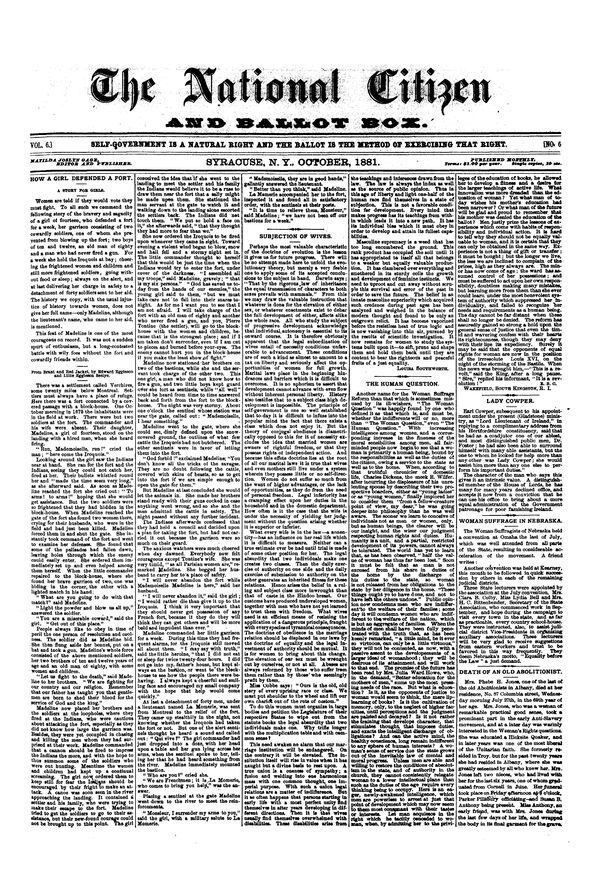
Matilda Joslyn Gage &
‘THE NATIONAL CITIZEN’
“The National Citizen and Ballot Box was a monthly journal deeply involved in the roots of the American feminist movement. It was owned and edited by Matilda Joslyn Gage, American women’s rights advocate, who helped to lead and publicize the suffrage movement in the United States. Gage bought The Ballot Box, a publication of a Toledo, Ohio suffrage association, in 1878 when its editor, Sarah R.L. Williams, decided to retire. Gage renamed it the National Citizen and Ballot Box and included her intentions for the paper in a prospectus: “Its especial object will be to secure national protection to women citizens in the exercise of their rights to vote…it will oppose Class Legislation of whatever form…Women of every class, condition, rank and name will find this paper their friend.”
Gage became the National Citizen and Ballot Box’s primary editor for the next three years (until 1881), producing and publishing essays on a wide range of issues. Each edition bore the motto “The Pen Is Mightier Than The Sword” and included regular columns about prominent women in history and female inventors. Gage wrote clearly, logically, and often with a dry wit and a well–honed sense of irony. Writing about laws which allowed a man to will his children to a guardian unrelated to their mother, Gage observed: “It is sometimes better to be a dead man than a live woman.””
(Source: History Commons)
1913-1920
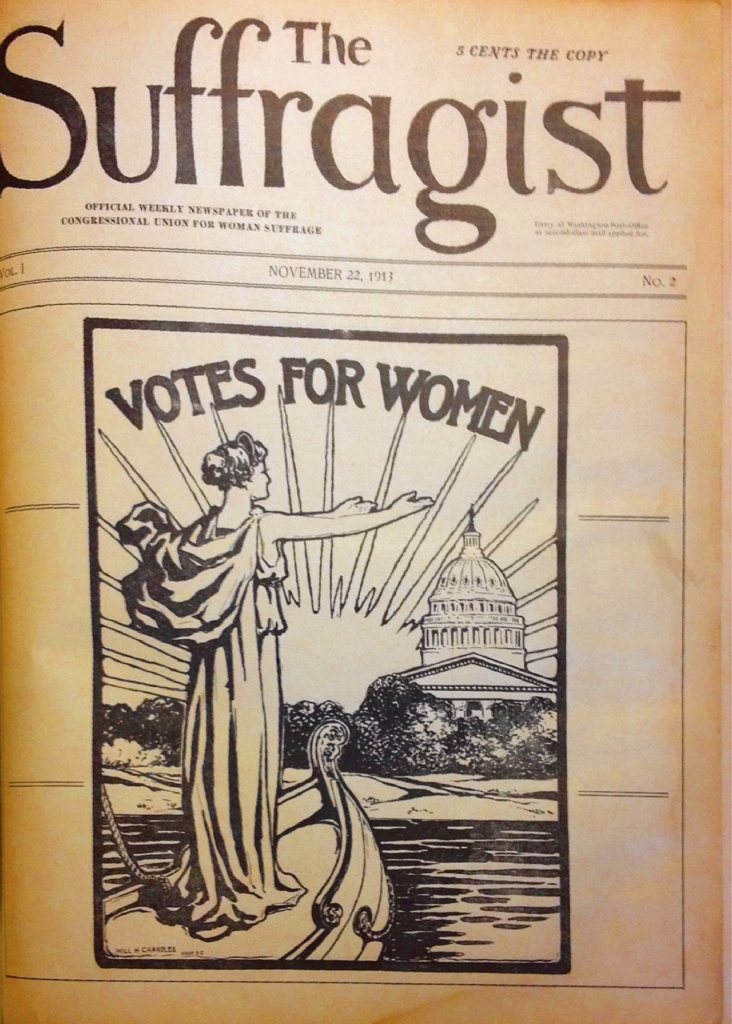
The Suffragist Movement & Its Newsletters
The first wave of feminists in America were brave women who were working hard for the vote. To spread their cause and further educate fellow women of the times, there were a plethora of women’s liberation newspapers being printed, self-published, and distributed among the country. A non-exhaustive list includes:
– Church League For Women’s Suffrage
– Common Cause
– Conservative and Unionist Women’s Franchise Review
– Free Church Suffrage Times
– The International Woman Suffrage News
– The Irish Citizen
– The Suffragette/Britannia
– The Vote
– Votes For Women
– Woman’s Dreadnought
– Woman’s Signal
– Women’s Franchise
– Women’s Suffrage Record
Not all women who led these movements included Black women or any women of color in the fight for the vote, however, which led to a lot of discrimination and many of the first wave of American feminists were blatantly racist and only working for the white woman’s vote.
Even though the 19th amendment was won in the year 1919 and passed for all women (later ratified in 1920), many polling places still imposed a poll tax and worse like intimidating and forbidding women of color from voting, along with men of color.
The early suffragists still took to self-publishing to get their messages out there building political power for the first wave of feminism’s fight. The Suffragist itself started publishing in 1913.
(Source: The Social History Archive)
1923-1949
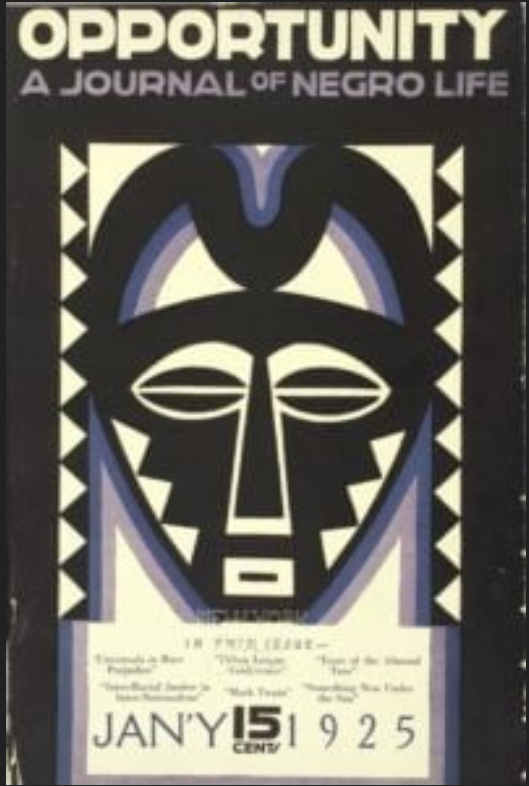
The Harlem Renaissance & Opportunity
Founded by the National Urban League, Opportunity served as a forum for study of the social issues faced by African Americans of the time as well as highlighting the literary culture of the Harlem Renaissance. In particular, from 1924 to 1927 Editor-in-chief Charles S. Johnson sponsored literary contests that helped promote the literary careers of writers such as Claude McKay, Nora Neale Hurston, Langston Hughes & Countee Cullen. HathiTrust has v.1 (1923), v.4 (1926), v.8-15 (1930-1937), v.20-27 (1942-1949)”
1926
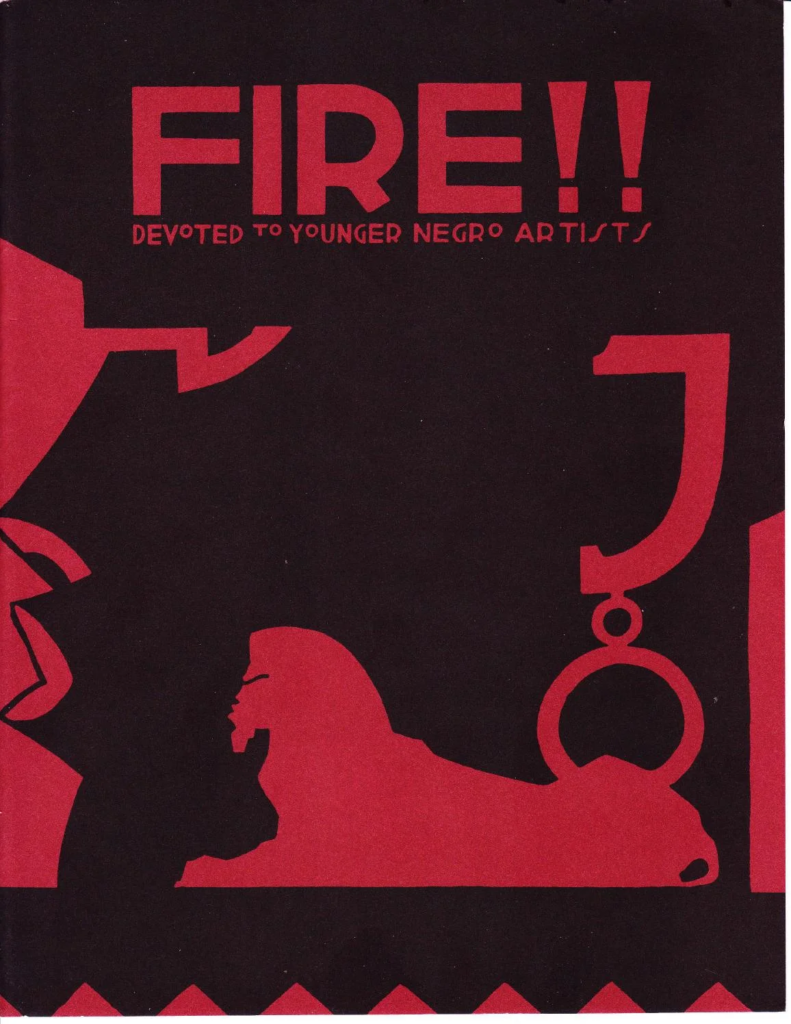
FIRE!! Short-Lived but Impactful
“Fire!! was conceived to express the Black American experience in a modern and realistic fashion, using literature as a vehicle. The magazine’s founders included Langston Hughes, Zora Neale Hurston, Gwendolyn Bennett, and Wallace Thurman. They wanted to express the changing attitudes of younger African Americans and explore contemporary issues such as homosexuality, interracial relationships, promiscuity, prostitution, and color prejudice. Hughes wrote that the name was intended to symbolize their goal “to burn up a lot of the old, dead conventional Negro-white ideas of the past … into a realization of the existence of the younger Negro writers and artists, and provide us with an outlet for publication not available in the limited pages of the small Negro magazines then existing.”
There was not a whole lot produced, and the remaining stock of the first print-run were literally burnt in a basement fire later in the same year of production.
There was only one issue and one print-run ever created. You can learn more about FIRE!! through The Smithsonian which holds some original copies in it’s collection. You can also purchase reprintings on Amazon too.
1925-1926

The Legacy of Eve Adams and ‘Lesbian Love’
“Eve Adams was a rebel. Born Chawa Zloczewer into a Jewish family in Poland, Adams emigrated to the United States in 1912. The young woman took a new name, befriended anarchists, sold radical publications, and ran lesbian-and-gay-friendly speakeasies in Chicago and New York
Then, in 1925, Adams risked all to write and publish a book titled Lesbian Love. In a repressive era, long before today’s gay liberation movement, when American women had just gained the right to vote, Adams’s bold activism caught the attention of the young J. Edgar Hoover and the US Bureau of Investigation, leading to her surveillance and arrest.
In a case that pitted immigration officials, the New York City police, and a biased informer against her, Adams was convicted of publishing an obscene book and of attempted sex with a policewoman sent to entrap her. Adams was jailed and then deported back to Europe, and ultimately murdered by Nazis in Auschwitz.”
(via OUT History excerpt of Jonathan Ned Katz’s book)
Eve Adams is a remarkable figure in queer history, and with the first major printing of lesbian literature leading to their arrest, deportation and eventual death at the hands of the enemy Eve’s story is nothing short of a testament to self-publishing and staking a claim for yourself and your own life at any cost. As we create lesbian literature in today’s world, we must remember that we stand upon the shoulders of giants like the late and greate Eve Adams. Do what would make them proud of you.
1930’s
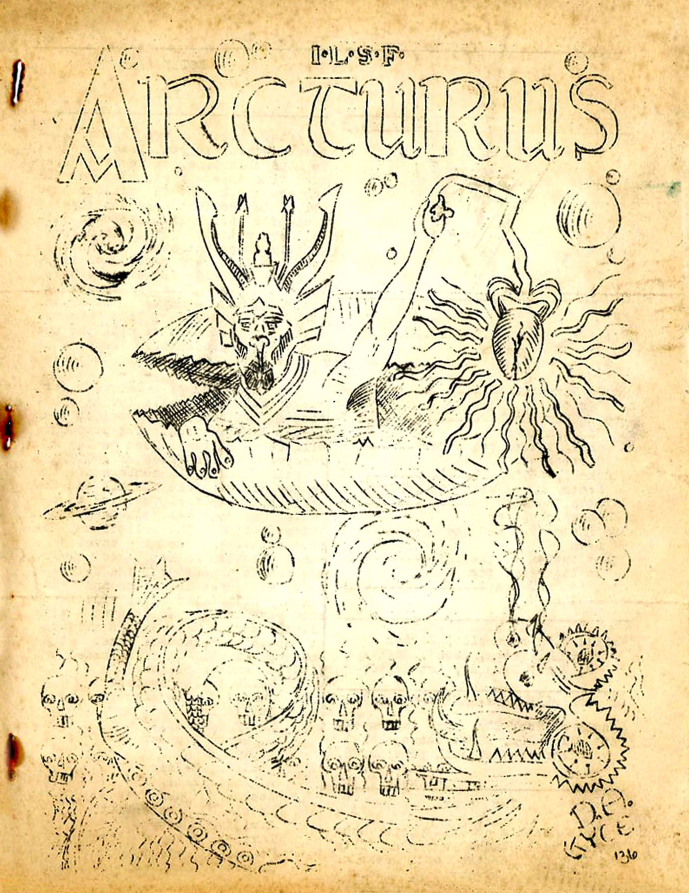
The Great Depression & Sci-Fi Fan-Zines
During the Great Depression and hard times of the 1930’s, science-fiction was an increasingly popular genre that had many fans aching for more accurate and well-written sci-fi media. Due to the lack of accessibility to send their nitpicky letters to the authors themselves, many fans worked together to start mailing each other letters featuring their reviews of sci-fi novels, stories, etc. containing criticism or praise. Often, it grew into the creation of their own written fanfiction. Eventually, people wanted to get this work out there to others via snail mail. So, turning to the mimmeograph – a type of duplicating machine we had before copy machines or the ‘Xerox’ – people created their own self-dubbed ‘fan-zines’ of the 1930’s. This started a huge boom of sci-fi review zines and more throughout the decade. Fandom, fanfiction and fan culture as we know it, stems from this practice and this decade.
1944
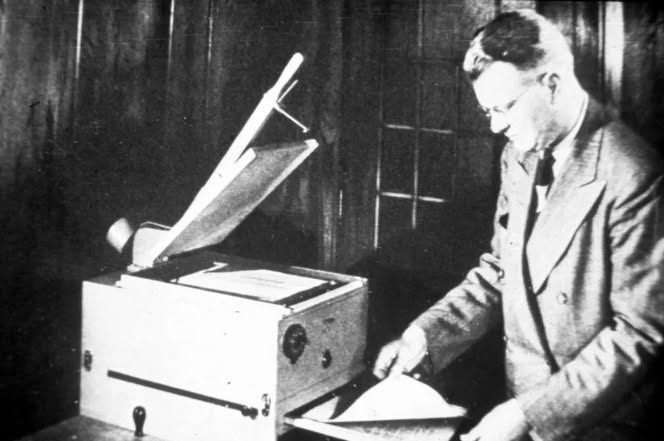
First Xerox Machine is Produced
Xerography is a process of producing images using electricity that was invented in 1938 by physicist-lawyer Chester Floyd “Chet” Carlson. In Columbus, Ohio, the Battelle industries picked up the invention of The Xerox Machine after Carlson could not push it any further with his own skills. He knew it could be improved. So, having entrusted his invention with Battelle they further developed the technology for the open market eventually becoming the common Xerox printing machines that we know of today. (via Columbus Historical Society on Facebook and Wikipedia)
1947-1948
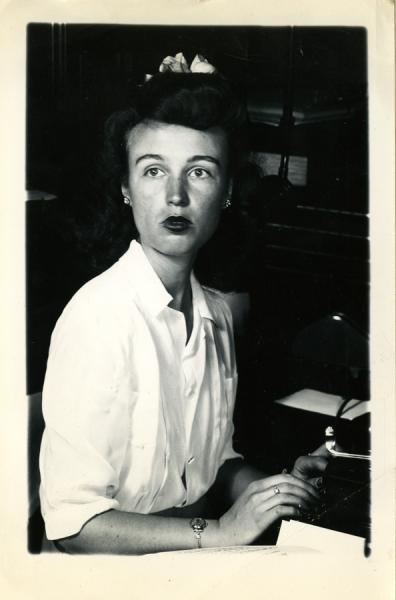
Lisa Ben & The First Lesbian Newsletter: Vice Versa
Reproduced and sent out widely via her boss’s mimmeograph technology, ‘Lisa Ben’ is a pen name that is a play on the word “lesbian.” Lisa Ben is credited as the very first lesbian periodical newsletter. She created “VICE VERSA” a newsletter she, in her own words started: “twice each month typed out five carvons and one original of Vice Versa. She recalled being told by her boss that he didn’t care what she was typing, but he wanted her to “look busy” so people as the studio would think he was important. She described the intention of the magazine being to create “a medium through which we may express our thoughts, our emotions, our opinions – as long as material was ‘within the bounds of good taste.'” Nine issues followed after the initial “VICE VERSA” which led to Lisa Ben creating a forum for lesbians to connect and communicate with one another via readers’ letters, personal essays, short fiction and poetry. The first issue was 15 pages long and subsequent issues ranged from 9 to 20 pages long.
(r/VintageLesbians SubReddit, u/XSaraXPoeX)
You can read EVERY ISSUE of Vice Versa here, by Lisa Ben, archived by ONE Archives of USC Libraries.
1959

First Commercial Photo-Copier is Produced for the Public: Introducing the Xerox 914!
“The culmination of inventor Chester Carlson’s work on the xerographic process, the 914 was fast and economical. The copier was introduced to the public on September 16, 1959, in a demonstration at the Sherry-Netherland Hotel in New York, shown on live television.” (via Wikipedia)
Watch the very first Xerox commercial via YouTube.
1960
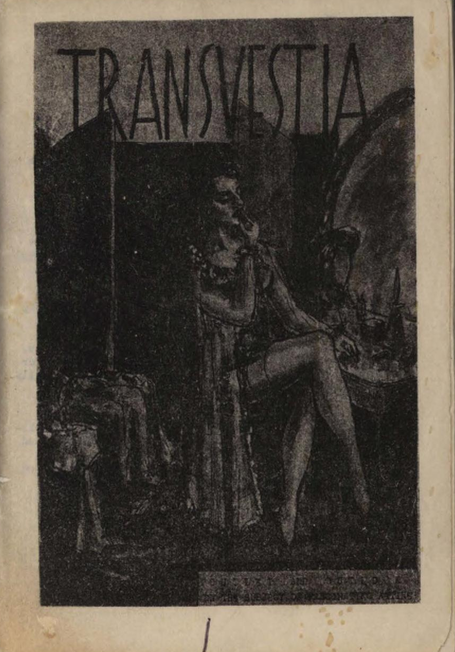
‘TRANSVESTIA’ – The First Trans Zine
“In 1960, Virginia Prince founded Transvestia magazine. Published six times a year in Los Angeles by Chevalier Publications, 1980-1986, it was edited by Prince until 1980, and then sold to Carol Beecroft, who acted as editor until 1986. Transvestia was the first widely-distributed magazine focused on the crossdressing community. In time, it expanded to include content about the larger trans community. In an era before the internet, the publication became a major life-line for its readers. In Transvestia, trans people could openly write about their experiences, challenges, and successes. Subscribers to the publication were able to network and connect with each other by way of articles, ads, and by personally writing to the editors.”
(via The Internet Archive, read EVERY ISSUE of Transvestia here!)
1954-1968
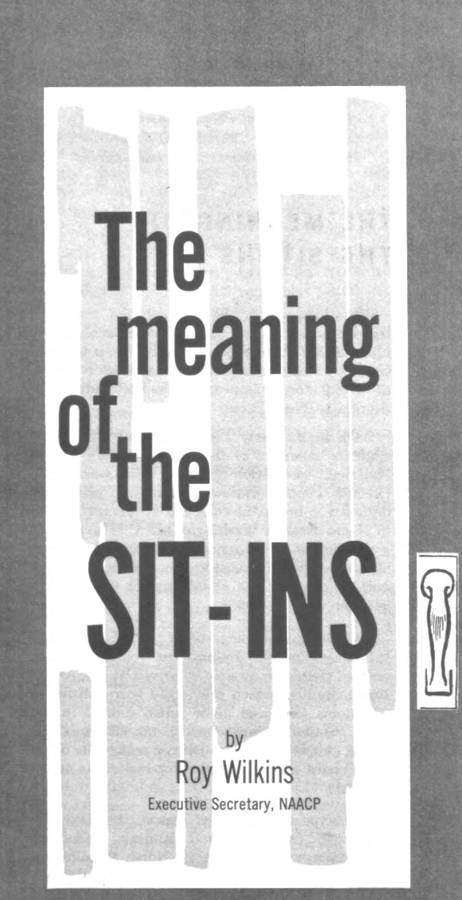
The Civil Rights Movement & Protest Literature
Led by the two great heroes of the Black community, Martin Luther King and Malcolm X, the Civil Rights Movement made great use of self-published literature and passing this lit around via underground means, in the passing of everyday folk and especially at protests for their rights. The education of the people was essential to coming together to demand better and to demand justice for the harm white supremacism has inflicted upon the Black community and their ancestors and descendents thereafter.
Word-of-mouth is one thing, but having a piece of paper to remind you is another. In the late 50’s, the Montgomery bus boycott began the fight for civil rights. Heavily distributed brochures and pamphlets about the sit-ins gained the nonviolent action more supporters and participants where it took place at Greensboro and Nashville in 1960. The distribution of Martin Luther King’s ‘Letter from Birmingham Jail’ took place in 1963 and moved many people to take action for justice. Later that year, the movement grew to a massive point where a March on Washington consisting of 250,000 people organized themselves towards demanding change. John F. Kennedy asked Congress to pass important civil rights legislation thereafter. In 1965, they completed a march from Selma to Montgomery.
All of these actions for change were fueled by self-published materials that spread the word of Martin Luther King and Malcolm X, in their own ways, independently, with a shared goal: liberation for the Black community.
Read about how the fears of communism led the FBI to surveil and eventually assassinate Martin Luther King in Juno Rylee Schultz’s “The FBI, COINTELPRO, and J. Edgar Hoover’s Surveillance State Against Black America”
1968 – 1971
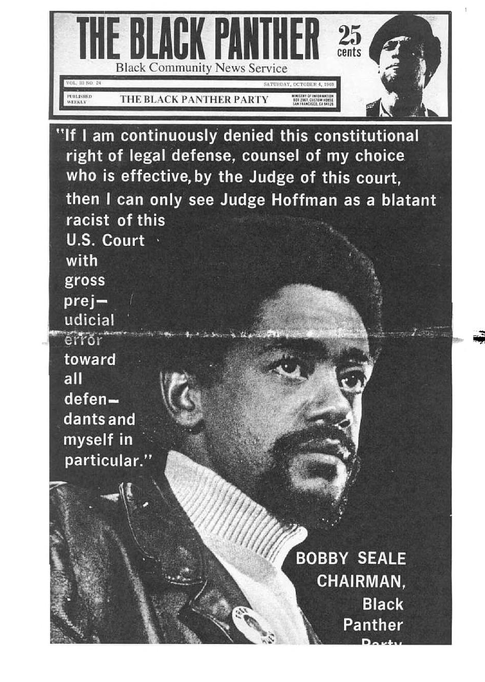
The Black Panther Party & Their Newspaper’s Role in the Fight for Black Liberation
The Black Panther Party establishes itself as a Marxist-Leninist (Communist) and Black power political and mutual aid organization headed by Huey P. Newton and Bobby Seale from 1966 to 1982. They follow a 10 Point Program that is their platform. They spearheaded the criticism of Black civil rights movement leaders for their moderate positions and commitment to incremental change. This is a commonplace struggle even in today’s age, where the Democrats as a functioning party also favor playing by the rules and making incremental change from within the systems pre-established. The Black Panther Party fed people directly with Free Breakfast Programs for kids which the USA government later stole the idea from after the pressure was mounting from the Black Panther Party’s efforts becoming more well known and enjoyed by the public. Ultimately, the Black Panther Party was a militant group seeking to demand better, more humane and communistic treatment of their people, especially the vulnerable children.
From 1968-1971 The Black Panther Party Newspaper was the #1 Black newspaper in the country selling 300,000 copies weekly which was totally self-published and printed. The newspaper contained a cultural reset in the space where media takes up our mind. It provided access to a community that helped solve one’s problems, and art created in-house by artists depicting *everyday people* which was an uncommon departure from the standard white mainstream media at the time. One of the most important parts of The Black Panther Party Newspaper was the fact that they insisted through their worldview and visuals: “You are worthy as a human being. You have rights, that are inalieable.” For the Black community, the BPP provided the much needed wedge against the injustices enacted by the United States government. Some deem this time as the “Second Reconstruction” era. The power of the BPP was feared by the government.
“The early days of Nixon’s presidency were tumultuous. There were several situations that raised alarm within the government, but nothing sounded louder than the Black Panther Party.
Hoover called the Black Panther Party and its leaders “the greatest threat to the internal security of the United States.” (Juno Rylee Schultz)
Find the ENTIRE ARCHIVE of The Black Panther Party’s self-published work here.
1967
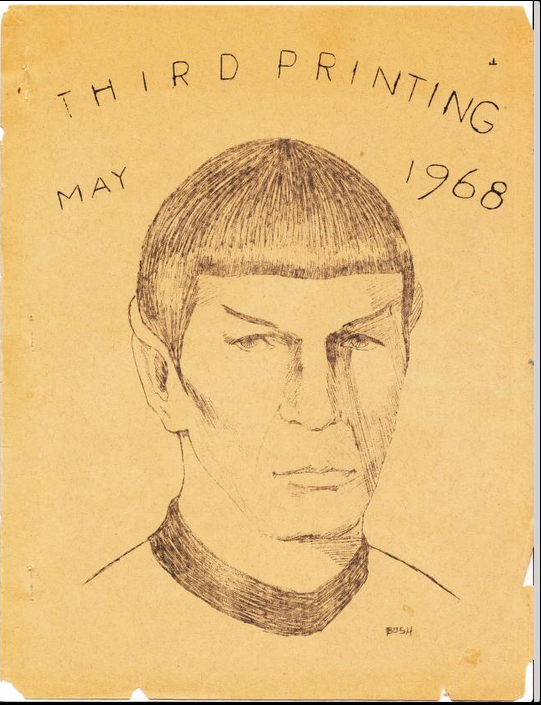
How The ‘SPOCKANALIA’ Fan-Zine by Devra Langsam Saved Star Trek TWICE by Popularizing A Letter Writing Campaign Started by Harlan Ellison
“Cancellation rumors circulated before the first season had even concluded, prompting Roddenberry to turn to a then-trusted friend for help: science fiction author Harlan Ellison, who would pen the early drafts of the show’s greatest triumph, “The City on the Edge of Forever.”
Ellison’s campaign began quietly. On December 1, 1966, he wrote to the Science Fiction Writers of America, rallying his colleagues to support the show. He warned that Star Trek’s cancellation “would be tragic, seeming to demonstrate that real science fiction cannot attract a mass audience. We need letters! Yours and ours, plus every science fiction fan and TV viewer we can reach through our publications and personal contacts.”
His plea circulated through the tight-knit science fiction community, where fanzines and word-of-mouth communication were the primary networking tools. While mainstream audiences were largely unaware of the threat, early fans recognized that Star Trek was something special—and that the show might need their help to survive.
Devra Langsam, who published Spockanalia, the first Star Trek fanzine, recalled how even the smallest efforts felt vital. During that first season, her cousin Debra took to the streets of Manhattan to hand out “Save Star Trek” flyers.”
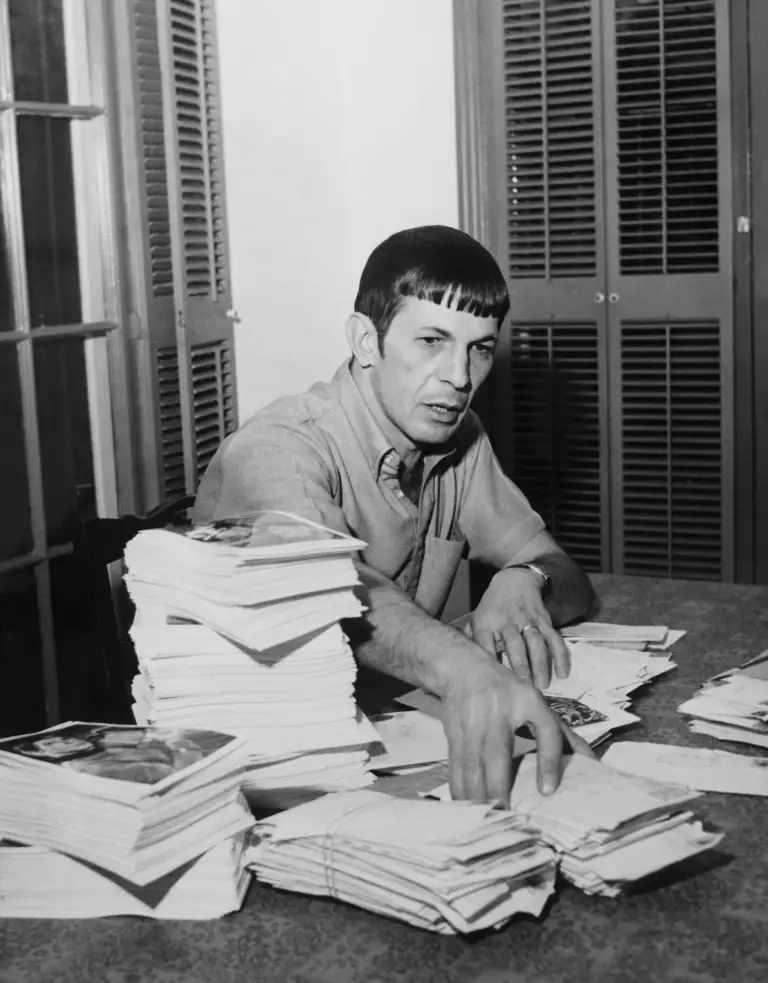
“NBC, which normally received about 50,000 pieces of mail per year across all programming, suddenly found itself inundated with hundreds of thousands of letters for a single show. Estimates ranged from 200,000 to one million. Whatever the true figure, it was enough to cause real disruption inside the network.”
(via Woman’s World, Ed Gross)
Eventually, after the third season was guaranteed and the show was saved the second time the Star Trek fandom organized the very first science-fiction convention where fans celebrated the successful campaign to save Star Trek and meet the cast in-person through panels and meet-and-greets. We owe it to the women of the Star Trek fandom for the fandom convention scenes we all love in today’s world.
1970
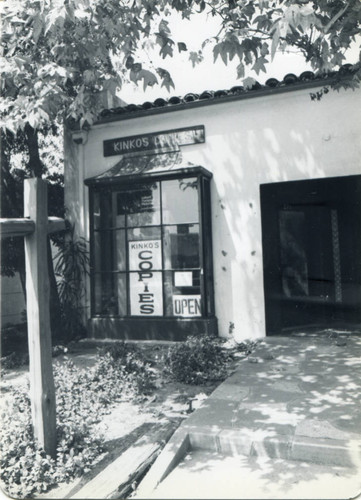
The Rise of Kinko’s Copy Shop & More Accessible Zine-Making
“In September 1970, Paul Orfalea, a man of Lebanese ancestry, just out of college, borrowed enough money to open his first photocopy shop in Isla Vista, the campus community of the University of California at Santa Barbara. Instead of calling it “Paul’s Copies,” he called it “Kinko’s” after the nickname given to him by his college buddies because of his curly, reddish hair.
The first store was located in the corner of a building that also housed a taco stand (which later proved advantageous when Paul cut a hole in the connecting wall, allowing him to order lunch without leaving the store).
This tiny Kinko’s was 100 square feet and featured a single copier, offset press, film processing and a small selection of stationery and school supplies. As the store grew, so did the number of machines.”
“By the mid-1970s Kinko’s was providing custom publishing materials for colleges, an innovation extremely popular with college professors. The company had 80 stores, averaging 400 square feet in space and located primarily near colleges and universities, by the end of the decade.”
(Kinko’s History)
1970’s
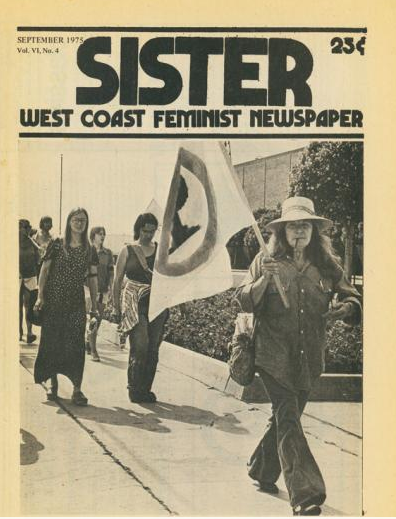
Second-Wave Feminism & Women’s Liberation Newspapers
Women were still fighting for basic rights all the way through the 1970’s. With the support of the Black community and following the Civil Rights Movement, the Women’s Liberation Movement and Second-wave Feminism boldly moved forward the amount of rights women could claim. Things we don’t think about nowadays for example the fact it took until 1974 for women to be allowed to legally get a credit card in their own name, not their husband’s (if they are even straight.) “The second wave [of feminism] lobbied for equality in all aspects of women’s experience, particularly in employment, politics, marriage and family, education, and sexuality. Landmark victories of second-wave feminists include the passage of the Equal Pay Act (1963) and Title IX (1972) and the legalization of abortion through the U.S. Supreme Court’s ruling on Roe v. Wade (1973).” (via Michael McDonough, Britannica) Their spreading of knowledge and information via self-published newspapers, very zine-like in nature, was crucial to building the power needed to demand these landmark cases. In current day, the patriarchy’s white supremacist fascism has repealed Roe v. Wade and abortion remains illegal in many states like our homestate of Texas. Fatalities due to pregnancy complications are now the United States’ leading cause of death for women and people who can get pregnant.
Late 1970’s
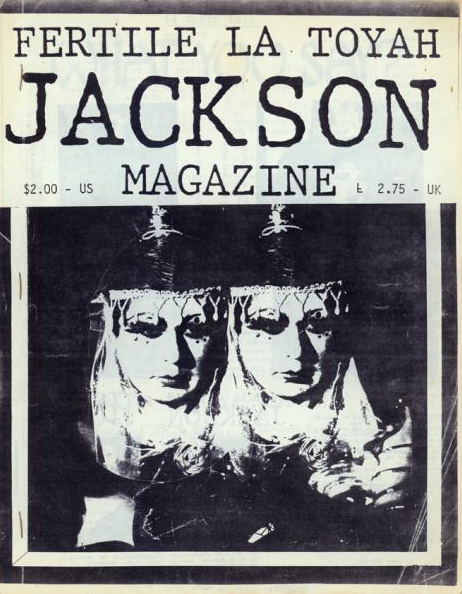
Counterculture: Punk Music Scene & Zines As A Way of Taking Up Space
“Legendary artist, activist, and creator, the divine Ms. Davis christened herself and her style as “terrorist drag” in the heteronormative Los Angeles punk scene of the 1970s. Experimenting with and hacking away at gender norms, she became part of the burgeoning queercore movement, an essential ingredient of which was zinemaking. Perhaps her most famous creation among many is the deliciously gossipy and dissident Fertile La Toyah Jackson Magazine.
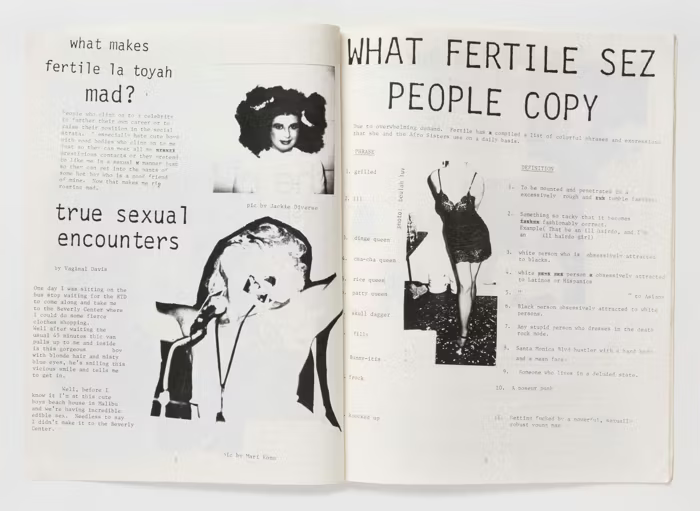
As a student at UCLA in the late 1980s, Vaginal Davis worked in the university’s career counseling office and used their Xerox machine to produce FTLJM. It became one of the most influential zines of the time.”
(via THEM.US article)
Her friends included other popular zine-makers of history, including…
- J.D.’S, out of Toronto, Canada, a queer anarcho-punk zine by G.B. Jones & Bruce LaBruce
- HOMOCORE out of San Francisco, California, USA, by Tom Jennings and Deke Nihilson, one of the very first explicitly queer zines.
Learn all about what “QUEERCORE” is and means, and how it serves as a response to assimilationist queer existence. We can learn a LOT from our QUEERCORE elders and ancestors, because assimilating to be “normal” and “just like the straight people” has only made us more vulnerable.
1981-1990’s
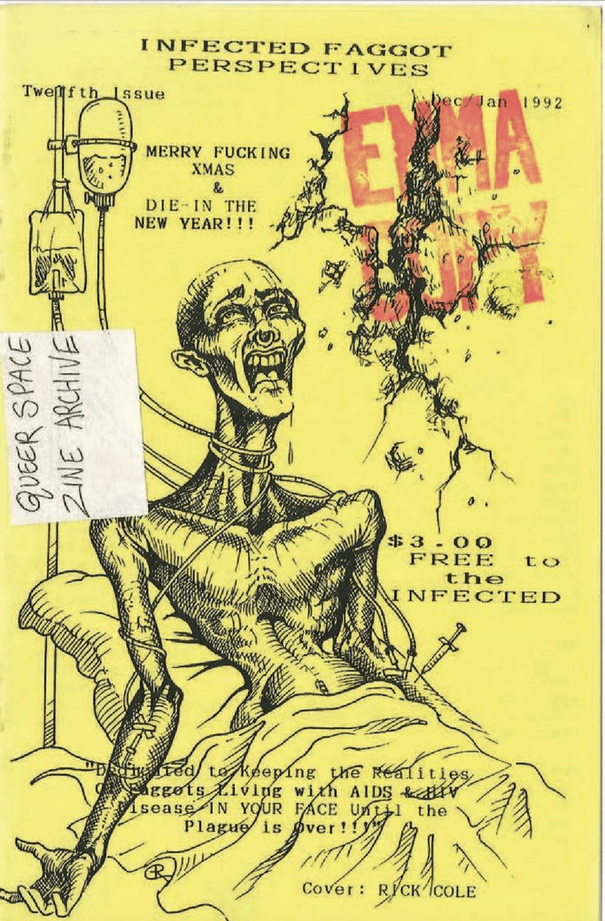
Catharsis; AIDS Gallows Humor & Patient PerZines
“The cover of Infected Faggot Perspectives #12, dated to December 1992/January 1993, and priced at “$3.00 or free to the infected”, confronts the reader with a caricature, signed to Rick Cole, of an emaciated figure in a hospital bed, strangled by IV lines, stuck full of needles, and dripping sweat. The zine’s tagline, which seems to have appeared on every issue, was:
“Dedicated to Keeping the Realities of Faggots Living with AIDS & HIV Disease IN YOUR FACE Until the Plague is Over!!!”
The zine dates from a time when AIDS was high in the U.S. public consciousness, following, for example, shortly after the death of Freddy Mercury, but a few years before the availability of the combination therapies that began to make HIV/AIDS more survivable for many of those able to access them.”
[…]
“The records that people who were actually living with AIDS left, as they fought for their friends’ lives are deeply precious to me. A crucial component of this cultural legacy is a dark, dark, dark gallows humour, suffused with rage at the abandonment of PWAs on both individual and cultural levels, the physical messiness of living and dying with AIDS, and the social messiness of organizing amidst mass sickness, death, and grief.
Directed outwards at a wider audience, AIDS gallows humour, alongside actions like the political funerals of ACT UP, aimed to force those not yet affected by the virus to confront the reality that people were dying young in excruciating pain, and nursing, burying, and mourning entire social circles in the face of public indifference and hostility.” (via Lee, writing for The Queer Zine Archive Project, blog entry)
1987
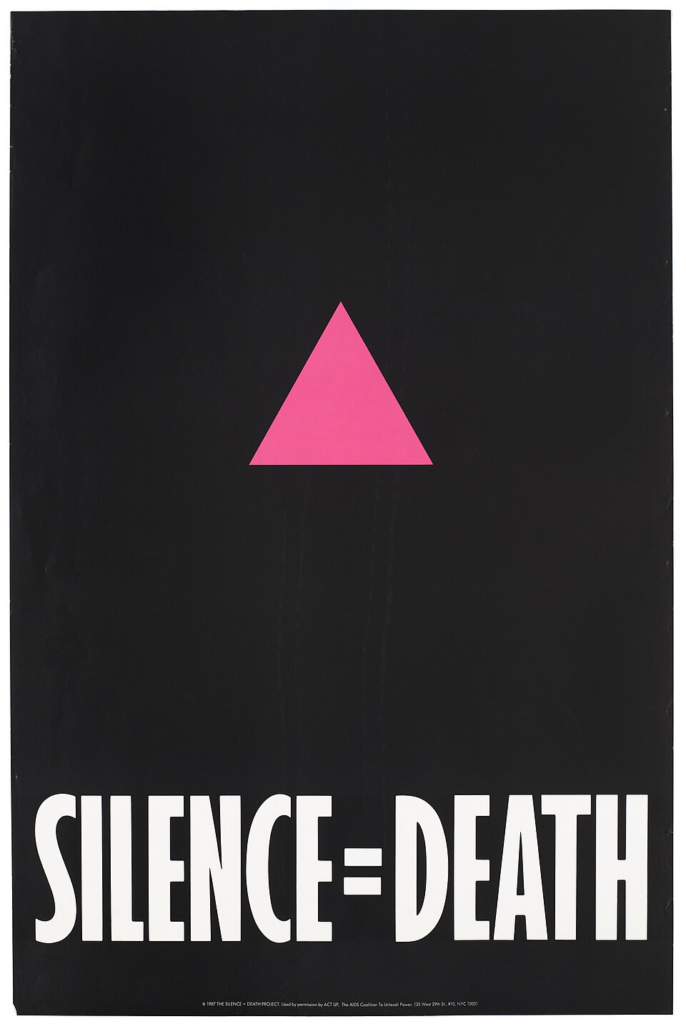
ACT UP & Their Fight For A Cure Using Art & Self-Published Political Agitprops
Amid the backdrop of the AIDS crisis, frequent death, and a seemingly incurable illness predominantly harming the LGBTQ+ community “rose Gran Fury, an activist art collective that played an instrumental role in bringing attention to the AIDS crisis. Gran Fury, an offshoot of the AIDS Coalition to Unleash Power (ACT UP), harnessed the power of visual media to embolden the voices of the LGBT community. They eschewed subtlety for pointed, provocative messages designed to infiltrate public consciousness through posters, billboards, and other forms of guerrilla art.
Gran Fury’s work often employed stark, iconic imagery to underscore the urgency and gravity of the epidemic. Campaigns such as “Silence = Death” and “Kissing Doesn’t Kill: Greed and Indifference Do” became rallying cries, symbolizing not only the literal struggle for survival against the disease but also a fight against societal apathy and governmental inaction.
The controversial nature of activist art during the AIDS crisis cannot be understated. Gran Fury’s direct and confrontational approach often incited debates on public funding, censorship, and the boundaries of artistic expression. Their works sparked significant public discourse, with some factions praising their bold stance and others decrying what they saw as inappropriate or offensive depictions.
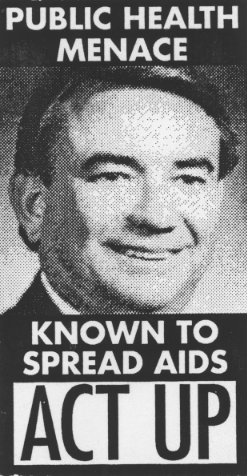
Despite facing resistance, the personal narratives and collective voices within Gran Fury created a powerful, indomitable force. Each member brought unique motivations and experiences, often deeply personal, which fueled their passionate activism. For many, the work transcended art; it was a lifeline and a call to solidarity in an era of widespread loss and grief.
The story of Gran Fury is not just a chronicle of art and activism; it is a testament to the enduring power of collective action in the face of adversity. As we reflect on this pivotal era, we are reminded of the indomitable spirit of those who dared to blend art with activism, challenging norms and inspiring societal transformation.”
View the living archive of everything ACT UP NY did at their official website.
1980’s-90’s
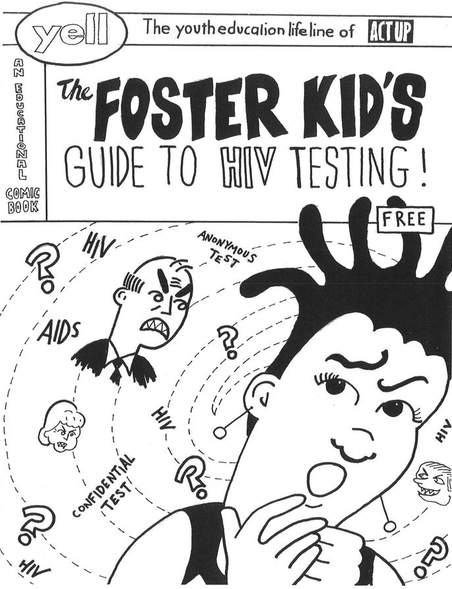
Queercore Blooms; Punk Music and Zines Intertwine
More artists included in the huge BOOM of queer zines in the 80’s – 90’s include artists like…
- Anonymous Boy, various work including “The Foster Kid’s Guide to HIV Testing”
- Larry-bob Roberts “Holy Titclamps” and “My Comrade/Sister” in NYC
- Margarita Alcantara’s “Bamboo Girl”
- Mimi Thi Nguyen’s “Slant,” “Slander,” and “Evolution of a Race Riot”
And more!
Many zines started originally as zines and developed into full-fledged musical band projects that continued to provide issues of their zines including events and shows planned, reviews of other zines or music, thoughts on the punk music scene and more. “Zines frequently overlapped with record labels” in the early 90’s.
Bands that started as zine projects or vice versa included…
- Fifth Column (Toronto, post-punk, art-punk)
- Pansy Division (funny gay pop punk, US West Coast)
- Sister George (UK)
- Outpunk (San Francisco, US) and their compilations “There’s A Faggot in the Pit” and “There’s A Dyke in the Pit” alongside Tribe 8 album after album.
- Donna Drech’s Chainsaw Records and Team Dresch feminist punk band
- God Is My Co-Pilot
- Sta-Prest
- Cypher in the Snow
- Behead the Prophet NLSL
- Huggy Bear
- Scissor Girls
- Sleater-Kinney
- The Dicks (from TX!)
Read all about the QUEERCORE moment and lives of the queer artists who made it possible in ‘QUEERCORE: HOW TO PUNK A REVOLUTION (An Oral History)’ by Liam Warfield, Walter Crasshole, And Yony Leyser
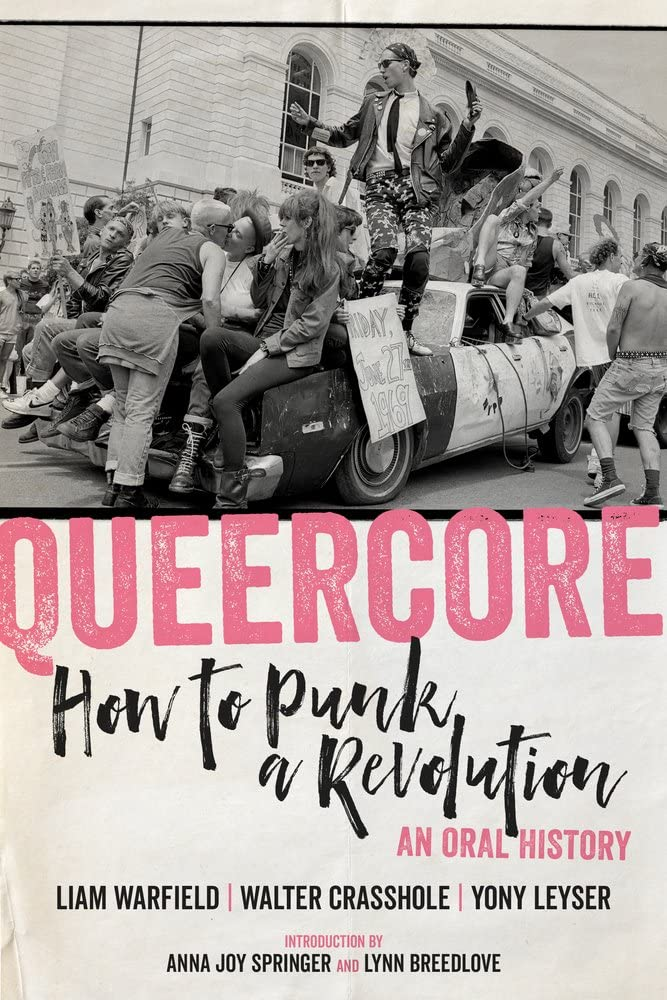
1991
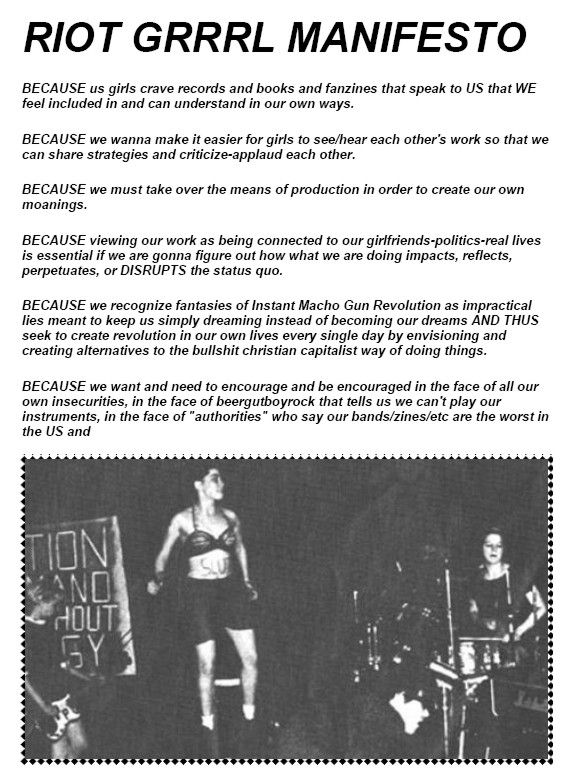
The Origins of the RIOT GRRRL Movement & Third-Wave Feminism
Kathleen Hanna of Bikini Kill, one of the most important feminist DIY queercore punk bands in existence, started making zines in her home of Seattle, Washington and released the very first RIOT GRRRL zine in 1991 after moving to Washington, D.C. for the purpose of founding this movement that eventually through the underground scene became a revival of feminist values and redefinition that included sex workers, queer people, dykes, and rejected the status quo and any form of assimilation. The Riot GRRRL Movement birthed Third-Wave Feminism which greatly encourages girls and women to take up space in places people don’t expect to see women: the punk music scene was where this started initially.
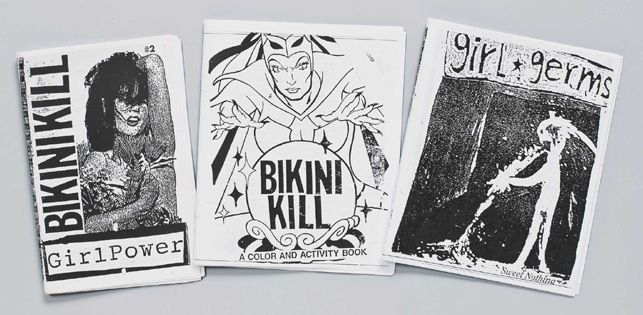
The sisterhood formed through the Riot GRRRL Movement aided women in many ways along with being intersectional in values held by riot grrrls. “Slut-shaming” and being against it started in this wave of feminism. Women were encouraged to liberate themselves sexually and embrace who they were; not as sex objects for male desire, but as free people who deserved the right to say no, OR yes!
1991
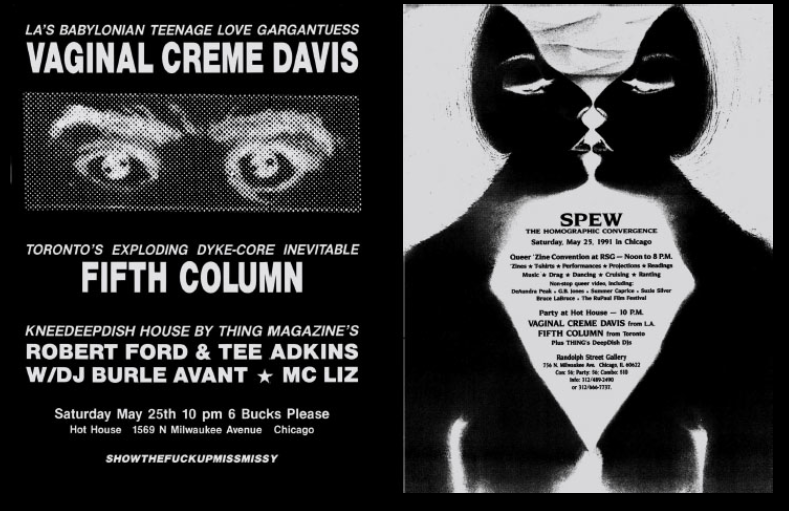
The SPEW Convention: First Queer Zine Fest
One of the greatest events and the very first queer zine fest as we know it in the USA was “THE SPEW CONVENTION” which tons of queer zinemakers, editors, writers, and artists from all around the continent (USA and Canada) came together to celebrate queer zines at Randolph Street Gallery in Chicago on May 25, 1991. It was an incredible event and started the tradition of zinefests as we know them today.
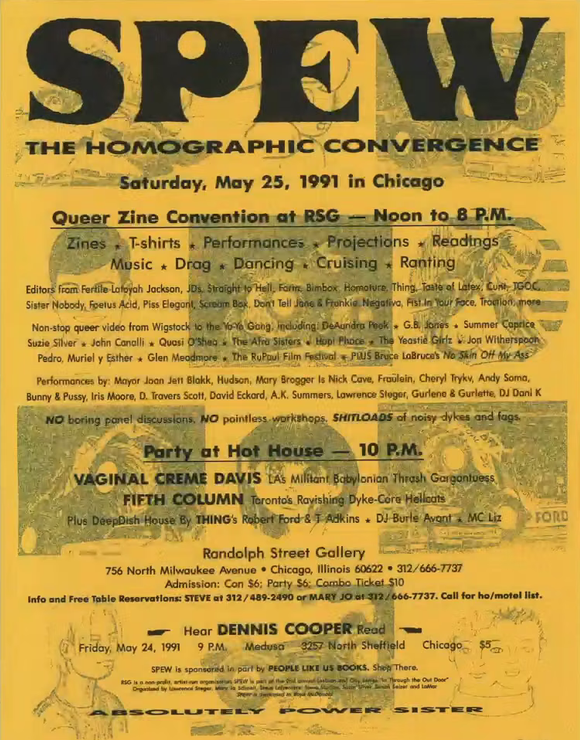
(Read more on Sixty Inches From Center, article by Ryan Edmund Thiel)
2003
The Queer Zine Archive Project (QZAP) is Born, Starting the Dawn of the Digital Archives
“QZAP was founded in November 2003 by Milo Miller and Chris Wilde. It has since maintained a physical collection in Milwaukee and a free online archive of digitized zines.” (via Wikipedia) QZAP is an immeasurably important aspect of the overall zine culture of the United States, and it is accessible worldwide. This zine archive project started after the initial years of the QUEERCORE moment from 1970s – 2000’s. As an effort to capture all of what went on during that blooming era of zine-making, the archive opened up to keep track of queer zines and the impact they have made over the years. QZAP is doing the hard work of maintaining our legacies as queer people, so younger queers can see their ancestors and what they have made years before they even existed. Their work is essential for maintaining an understanding of our history. We recommend visiting them today!
VISIT THE QUEER ZINE ARCHIVE PROJECT (QZAP)
2010’s
Zine Fests Pop Up All Over the World!
Many zinefests that happen today got their start in the early 2000’s and most commonly the 2010’s. Just for the ones we know of in Texas that are still ongoing include…
- Denton Zine and Art Party
- STAPLE! Austin
- Lone Star Zine Fest, Austin
- Risorama, Corpus Christi
- San Anto Zine Fest
- Zine Fest Houston
- Ft Worth Zine Fest
- Dallas Zine Fest
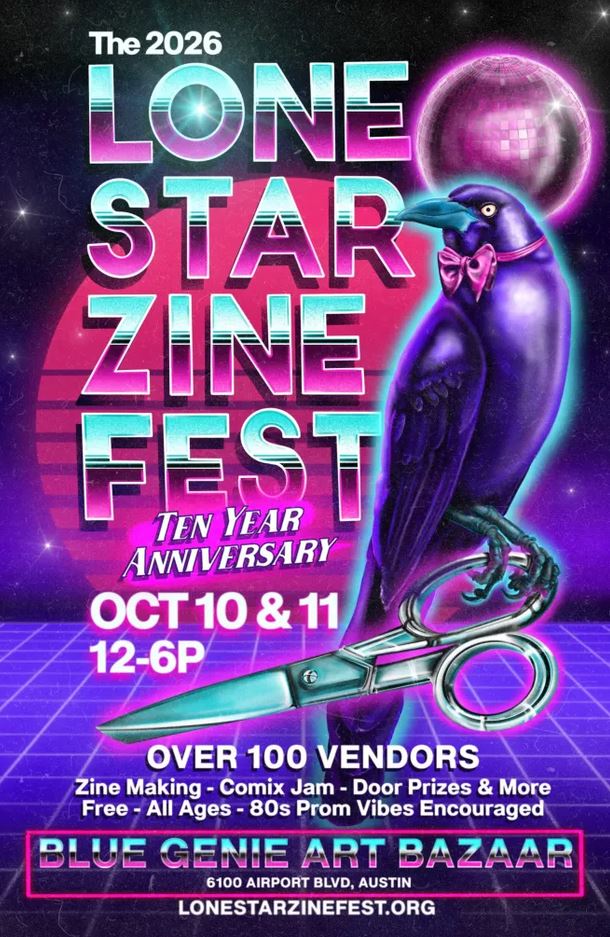
A lot of Anarchist Book Fairs run coinciding with the Zine Fests often at the exact same event. Anarchist book stores also often carry zines, and give many of them away. A place called Monkeywrench Books in Austin, TX is an anarchist co-op book store and place with tons of zines you can learn a lot from. We recommend finding any anarchist book stores in your area if you’re seeking out zines to collect. Sometimes, anarchist bookstores do pop-ups like The Bohemian Bookshop.
Find EVEN MORE zinefests in different areas via Printed Matter Inc.’s list.
2016
Anti-Fascist Zines & The E-Zine
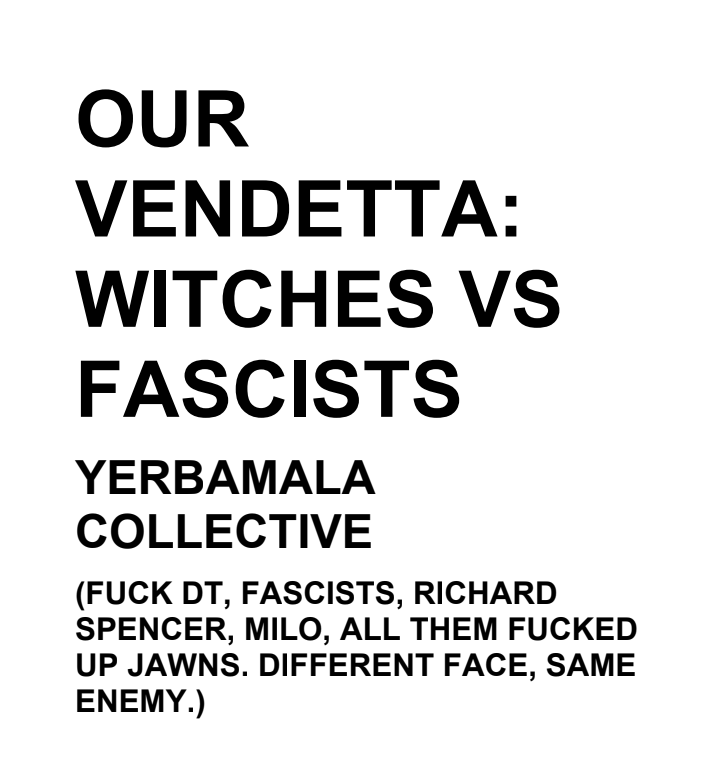
With the election of Donald Trump in 2016, the shifting tides continued to steer towards total fascist takeover in the volatile country of the United States. People started turning to zines almost right away, with many people working together to proclaim their thoughts in the form of zines, a favorite is the “Our Vendetta: Witches VS Fascists” by Yerbamala Collective from DT’s first presidency, still valuable in today’s world where we face down the last two years (hopefully) of DT’s second disastrous and painful second presidency.
Read “OUR VENDETTA” here in our anti-fascist zines collection!
2020’s

The 2020’s Zine Resurgence & Revolution
The murder of George Floyd sparked the fire of waves of protests demanding an end to police brutality against the Black community. People proclaimed “Black Lives Matter!” and it was a deeply important time in our cultural history. During this time, zines became a frequent avenue for modern people to spread their knowledge. These zines contained how to protest safely, how to fight fascists with various street-legal tactics, how to plaster propaganda up and do wheatpasting without getting caught, and more anarchist methods that helped the current societal shift towards a more just future – especially for the Black community, continuously murdered by police with brute force and no compassion for their lives.

Many zines popped up and the popularity of groups like CrimeThinc.com as an anarchist organization skyrocketed as people were desperate to communicate to one another. Zines and self-published material led to great efforts to make change happen, to make a difference. Even though we had a sitting Democrat president from 2020 – 2024, the rise of fascism was still on high and the police state cracked down on many protesters, some people receiving felony convictions and even some being murdered at later times for being seen at protests or having any involvement with the movement for Black Lives Matter. It was a horrifying time for the Black community and there seemed to be some form of repair happening after 2020, but it was quickly rescinded by 2024’s presidential election where companies withdrew their programs for empowering and making space for Black students, graduates, job seekers, and anyone seeking somewhere to work professionally or advance their academic career. Fascism is intertwined with racism, because fascism is when racism is applied to everyone in the society and everyone suffers together. Fascism is always happening to POC as racism is the core ingredient to a fascist’s beliefs. The horrible and incorrect beliefs that white supremacists tout are now rewarded by our society by 2026. Zines from 2020-2025 paint the story of what people endured and survived on the ground standing up for what is right and fighting back against police brutality.
Find anti-fascist and anarchist literature and more at CRIMETHINC.com
2025
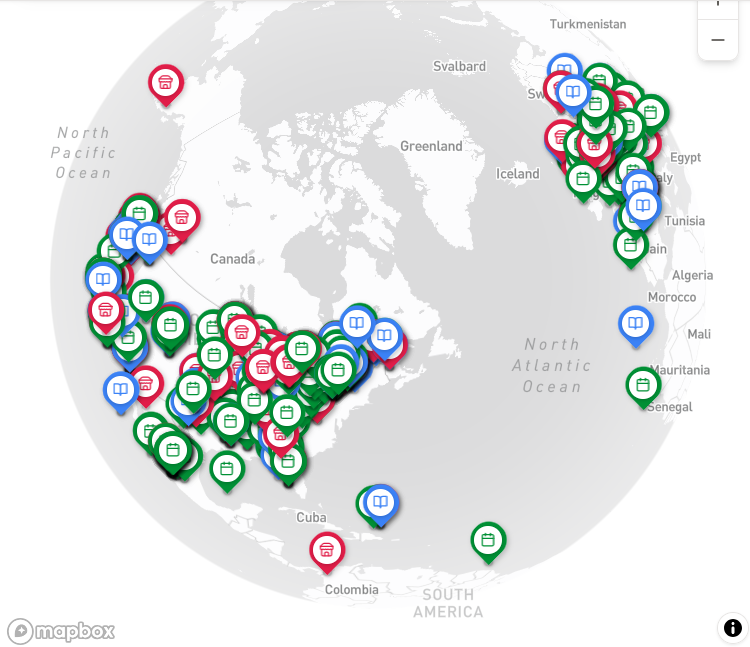
ZineMap.com is Established, Connecting Hundreds of Zinesters Worldwide
In July of 2025, for International Zine Month a zinester going by CJ established ZineMap.com a functional collaborative map of the global zine scene! As of October 1st, 2026, the zine map has 1,000 members across 40 countries helping contribute to building out a map of the zine scenes worldwide. We highly recommend joining this website and adding your knowledge about the zine scene or connecting to other zinesters near you who want to collaborate! Find places to send your zines to, access the “zine economy” of sorts and trade things with cool people from afar!
Make a zine friend today via ZineMap.com!
![Why self-publish under fascism?
"To experience the freedom of making something without waiting for permission.
To be uncontrollable.
To create a record, that is directly, or indirectly reflective or descriptive of your condition.
Because historians and archivists aren't going to be able to read all the brilliant stuff you only shared on social media platforms that probably won't exist in twenty years or less.
Because even the cheapest garbage paper survives a million times better than technology that rapidly becomes outmoded on purpose by tech assholes.
Self-publish to experience a feeling of resourcefulness, knowing that you can produce a publication with whatever means you and your collaborators have on hand.
To practice printing and crafting techniques that are cheap, fast, easy, and soulful.
Because you also might get to collate, staple, score, fold, and trim your zines under fascism.
To make something that helps you feel available to others and accountable for your words and editorial decisions.
To write words and print images and make creative decisions that a corporate newspaper or publishing imprint would never allow to see the light of day under fascism.
Because we know that people have always created, and written, and made art, and even self-published during wars, in prisons, [...]"](https://blog.ovaettr.gay/wp-content/uploads/2026/10/image-29-1024x703.png)
Why Self-Publish Under Fascism? A Zine by Marc Fischer (2025)
Why self-publish under fascism?
“To experience the freedom of making something without waiting for permission.
To be uncontrollable.
To create a record, that is directly, or indirectly reflective or descriptive of your condition.
Because historians and archivists aren’t going to be able to read all the brilliant stuff you only shared on social media platforms that probably won’t exist in twenty years or less.
Because even the cheapest garbage paper survives a million times better than technology that rapidly becomes outmoded on purpose by tech assholes.
Self-publish to experience a feeling of resourcefulness, knowing that you can produce a publication with whatever means you and your collaborators have on hand.
To practice printing and crafting techniques that are cheap, fast, easy, and soulful.
Because you also might get to collate, staple, score, fold, and trim your zines under fascism.
To make something that helps you feel available to others and accountable for your words and editorial decisions.
To write words and print images and make creative decisions that a corporate newspaper or publishing imprint would never allow to see the light of day under fascism.
Because we know that people have always created, and written, and made art, and even self-published during wars, in prisons, […]”
New Article Series Unpacking Each Moment of Zine History in Detail!
Following the publishing of this overarching timeline of zine history, we will be diving into each bookmark along the timeline to elaborate more and talk about the historical accounts of zine-like self-publishings of the past and how self-publishing serves us in offering a way to liberate ourselves and our people through shared education. Join us on this journey through the timeline with one article per month investigating another point on the timeline, posting in chronological order (as best as we can)! Thanks for reading! This timeline is just a taste of what is to come from Ovaettr Art & Zine Distro! 🙂
Zines, Continued Resources…
Start your journey with self-publishing today by visiting our Learn Zines page!
Find tons of zines to read through our Libraries page!
Sign-up for our Monthly Zine Distro Mail Club to recieve 2 or 3 zines per month in your snail mail inbox!
Learn to make your own 8-Page Mini Zine today with this cool video demonstration we made!
Join us on the 2nd Monday of every month at the Denton Maker Center for our Making Zines 101 Workshop! 6PM – 9PM
