Common folk shared healing knowledge and survival skills via “witch zines”
Soon to be followed by guides on how to hunt witches sponsored by The Church.
Home > Blog > Witch Zines & Witchhunters (1440’s-1750) | Zine History #1
“The printing press, invented around 1440, dramatically changed the way by which literate populations were able to circulate information.” Witch zines remain the first circulating type of self-published work that are considerably “zine-like.” They survived throughout the underground passed between hands of the peasantry and cunningfolk. These proto-zines primarily included old world ways of healing people. Also, commonly found in them would be information on birth control, astrology, potion recipes, and/or instruction on beneficial spells. “Lay healers of all genders often worked in isolated communities, creating herbal remedies, consulting astrology and other magical means as a way of diagnosing and treating illness, and creating amulets and protection against harmful, unexplainable forces.” (via Women’s Museum of California: ‘Witches in Print’)
Surprisingly, the appearance of zines spans much further back than the commonly attributed 1930’s Fan-Zine era. We use the modern term “zine” as derived from “fan-zine” which itself comes from “little magazines” from the prior decade. However, for our Zine History series and our thesis we are expanding our working definition of the term “zine.” This will now include anything self-published passed around through the underground, the commonfolk. With this expanded definition it paints the whole picture as to WHY we make zines to begin with.
Nonetheless, at every significant turn of history that presents examples of “zines,” there is a big leap forward in progress. Revolutions run on the fuel of by self-published material and independent distribution methods outside of state or monarchy’s control. The freedom of the press; the freedom to have an idea all your own to put out there.
These two things are the core guts of why we get up in the morning and want to make zines. We have a message. We have something we want to say to the world. Or maybe something smaller scale, to our neighbors, our friends, our families or even ourselves.
Zines provide a direct road to that kind of freedom. To have an idea. To say something. Altogether, that is what I would like to look at and examine throughout these articles. Please join me as we learn together the impact of self-publishing throughout history.
Self-publishing is a means of liberating the self, a peoples, a society, or the whole entire world.
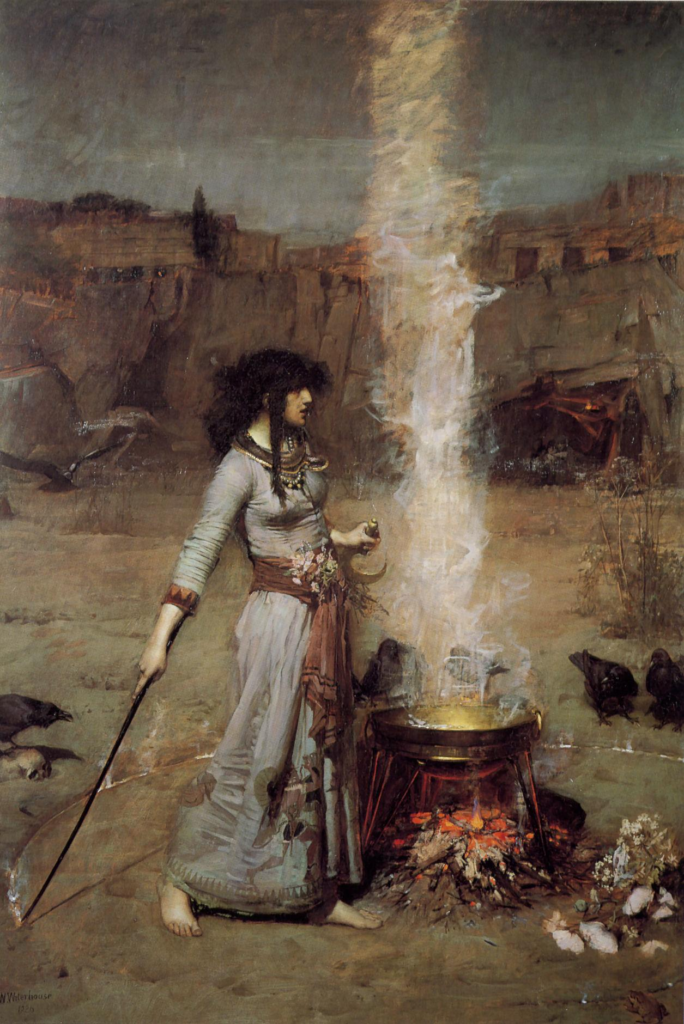
Significantly so, the printing press allowed an explosion of printed material to hit society at an alarming rate. Its presence further democratised information and got it directly into the hands of the people who needed it. This wave in publishing produces cheap papers, broadsheets that proclaim anything the creator wants. They were only worth a single penny per page and sold in the streets. Additionally, they would often plaster these up in the market squares or in bars, and areas where people would see them. “Cheap print was the medium of the masses, and the crude woodcuts were teh visual language of early modern England.” (via The Public Domain Review)
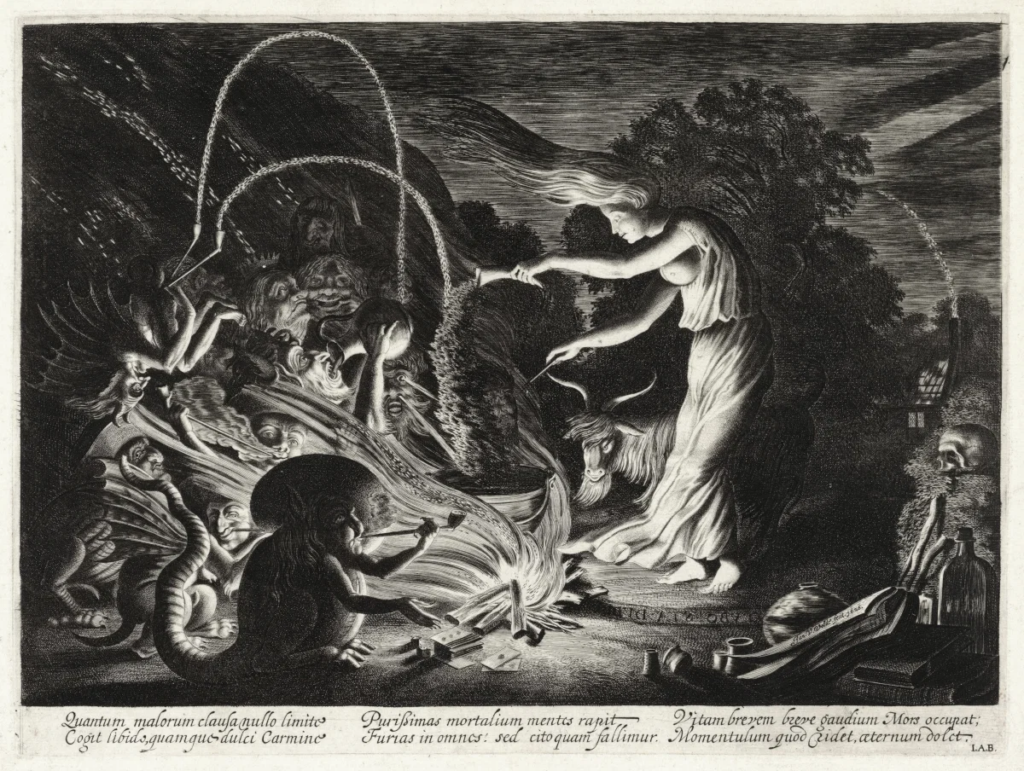
This revolution in modern printing grew parallel to what many people deem “the European witch craze.” It is described as the many-years long “moral panic and collective psychosis that spread through Europe and Scandinavia during the sixteenth and seventeenth centuries.” (via The Public Domain Review) This panic took many innocent lives of marginalized women, many being people of color too. It is a convenient way to further oppress the oppressed for speaking out. Alongside this, anyone who demanded better treatment or for those simply deemed “too independent” became targets. What happened to these countless women is unforgiveable.
Specifically, this mass panic began in 1484 when two Dominican Inquisitors appealed to Pope Innocent VIII for permission to “launch a witch hunt.” They sought to publish their findings afterwards. Their mission receives an issuance of a papal bull, authorising their “witch hunt.” After two long years of this mysterious (and most likely deadly) hunt the Dominician Inquisitors return with a new publishing called…

‘Malleus Maleficarum‘ AKA ‘The Hammer of Witches’ by Heinrich Kramer, released 1487
“The church and those in power made expert use of the printing press, weaponizing it to disseminate propaganda that declared magic and witchcraft inherently evil. With the intent of identifying and punishing women who did not submit to their will, then the church used reproducible media to associate independent women with witchcraft, regardless of their actual experience with magic.”
Hunting “witches” serves only as a means of oppressing and disempowering peasants who were primarily women in the old world. This type of use of the printing press is counter to what we’d like self-publishing to typically empower. However, these witchhunter “zines” are an important part of self-publishing history. Hunts “were organized, initiated, financed, and executed by the church and state in an attempt to control women and much of the imagery was disseminated through the mass production made possible through the printing press.”
(via Women’s Museum of California)
Joe Biel, writer of “Make A Zine!” mentions that this handbook stands only second to the Bible as one of the most important books the Gutenberg press ever printed. It remains one of the most widely distributed booklets on Earth. Biel informs us that it “outlined how to find and expose “witches.” It allowed the Church to quickly distribute a kind of uniform code throughout Europe, and is the reason that inquisition questions and procedures across the continent were so quickly disseminated and so similar.” (via “Make A Zine!”, pg 16, by Joe Biel)
The Evolution of Witch Zines & A Re-Emergence (1970’s -1990’s)

Once the Xerox and subsequent copy shops were opened in the 1970’s, there was a huge boom of witch zines covering witchcraft basics, Wicca, Paganism, hereditary paths from Celtic and Welsh and even more backgrounds, and many periodicals for specific areas or functioning as entry-way press publications for the curious souls who find their way to witchcraft through books and literature. This coincides with the invention of the path of Wicca in 1954 with the publication from Gerald Gardner titled ‘Witchcraft Today’ and his initial Wiccan coven. Many, many pathways spread out from this enlightening upheaval in society throughout the next fifty years, including some going back to traditional methods and some lighting the pathways to establishing Neo-Pagan practices that we still use today.
Special Feature: The Witchcraft + Pagan Periodicals Archive, by Daphna Romanoff
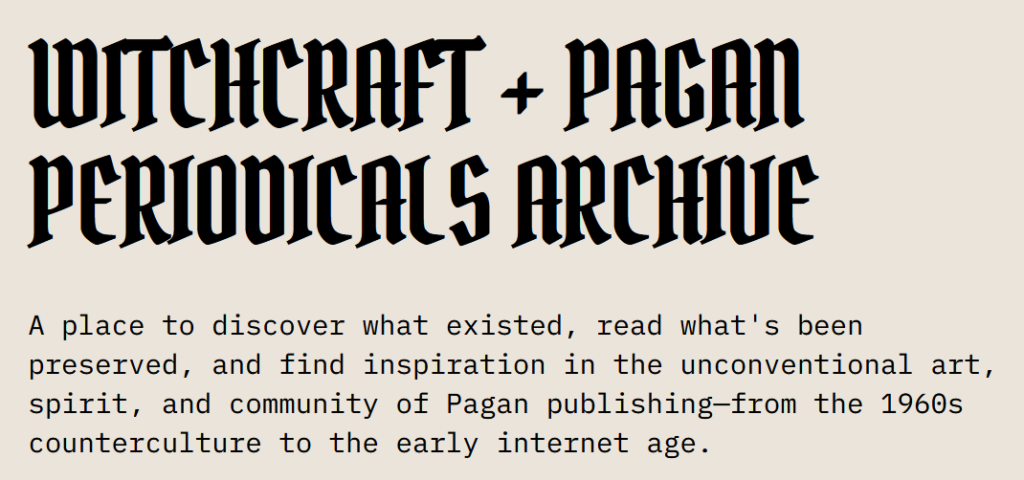
We highly recommend checking out the 20th Century through the Early 21st Century zines collected by Daphna Romanoff. She covers the 1960’s – 2020’s contributions of witch zines and Pagan periodicals. They are all readable in PDF format and easy to access and save for later via the Internet Archive. We really appreciate Daphna’s hard work and think that the wealth of information available for present-day witches. These older publications can provide us a compass for where to go with our modern day paths and personal philosophies.
VIEW THE WITCH ZINES + PAGAN PERIODICALS ARCHIVE HERE
Witch Zines in the Modern Sense
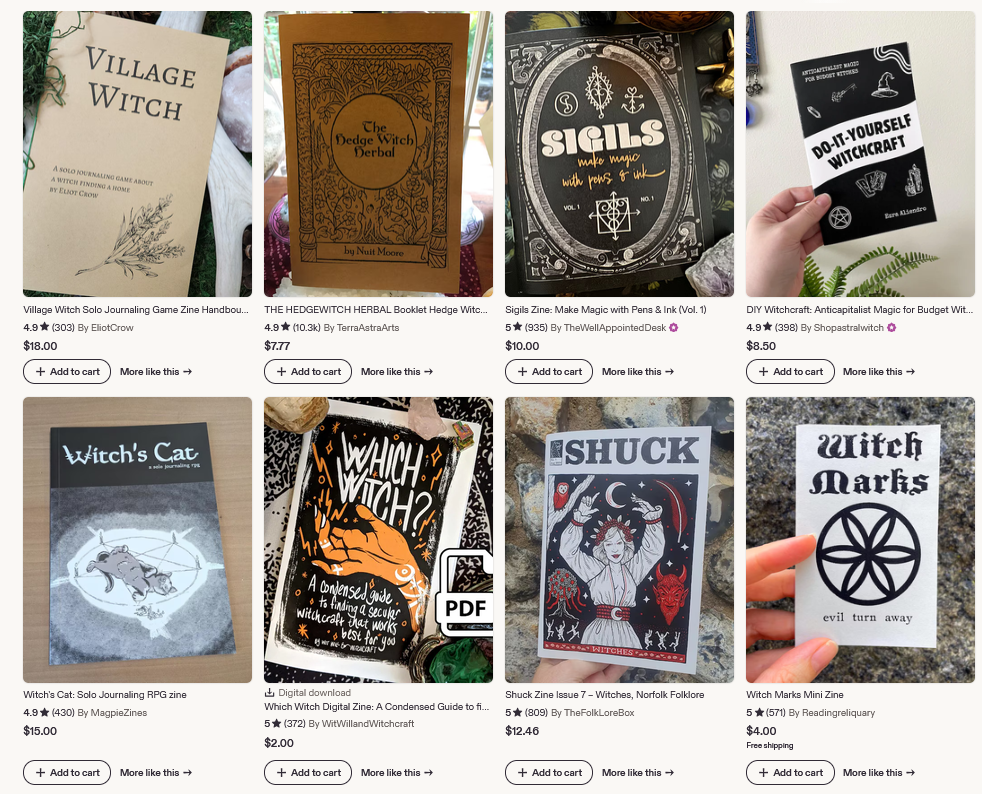
One can easily type in “witch zines” on Etsy.com and find many. What is it about witchcraft that humans can’t get enough of?
In its most modern incarnation witches nowadays often prefer calling their path “secular witchcraft.”
Secular witchcraft is witchcraft and it’s belief systems but absent of any gods / goddesses and reverence of such figures.
Many people who come to witchcraft will arrive to it after having been abandoned from their original church bodies they grew up in for a multitude of reasons. These unjustified reasons basically mirror with the original reasons that The Church had so-called “witches” burned at the stake over. They [witches, or women in general] are outcast for having independent thought, siding with reason, believing in the science, trusting in women, believing the marginalized deserve their rights, believing people deserve freedom, being queer and/or trans (LGBTQ+), etc. Ultimately, for not submitting to the cisgender heterosexual patriarchal white supremacy ruining this planet, witches, women, and all marginalized people have been punished for hundreds of years.
So, it makes sense why so many of us come to witchcraft bruised and beaten from our experiences with Christianity in the USA where I as the author live, especially here in the Southern United States. So, witchcraft and the need for a secular approach to it is a well-respected path many take nowadays. Humans like to move with the seasonal shifts and celebrating them 8 times a year and focusing more on the elements, celestial bodies, and the natural world itself is a large home for many people considering themselves witches in modern day.
The Future of Witch Zines
I feel that witch zines will continue to permeate our culture, as they always have. The wisdom of the commonfolk passes from one life to the next through paper trails. Our knowledge remains hidden from the extremist eyes of the Christian Right-wing and their nationalist approach to governing our country. Despite this opposition, and the ongoing oppression, witches survive all things. Because witches are like seeds – bury them, and they’ll keep growing, passing on their seeds to the next generation. Each zine, pamphlet, book, and message is like a little seed in itself holding important ideas that are worth keeping close to one’s heart forever and eternally so.
Related Questions & Answers
Yes, you can find the following zines covering witchcraft in my distro…
– Spells 4 Anti-Fascist Witches
– Little Handbook of Love Spells
– Neo-Paganism for Beginners
– Witchcraft for Beginners
I am a Norse Pagan, more specifically a Vanatruar – a person who follows the Vanir gods of the Aesir/Vanir pantheons from Norse mythology. I particularily have been a follower of Freyja since I was 15 years old (35 as of 2026, so 20 years total) I also follow and worship the mother of monsters, Medusa. Both have altarspace in my home and have for years. For the type of witch I am, I consider myself a Green Witch as I work closely with plants, herbs, crystals, fire, candles, and tarot. I am a tarot reader of over 15+ years experience and prefer to divine through the cards, astrological movements, my dream symbolism, or via song seer shufflemancy.